
Finding the right belt can make heavy squats feel more stable, more controlled, and easier to brace properly. The best option depends on your lifting style, torso length, and how much support you want.
Below, we’ve rounded up 10 strong choices for lifters who want dependable support without guesswork. Whether you prefer leather, lever, or quick-lock designs, this guide helps narrow down the best fit for your training.
Best 10 Weightlifting Belt for Heavy Squats Picks for 2026
Heavy-Duty Leather Pick
Dark Iron Fitness Genuine Leather Weightlifting Belt
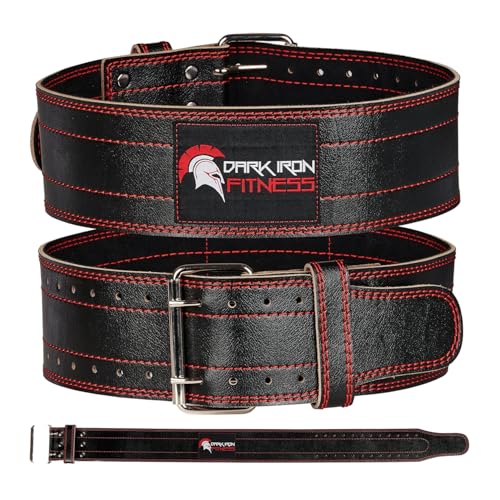
- Real leather with reinforced double-row stitching
- 4-inch width for stable squat and deadlift support
- Double-prong buckle with secure keeper loop
Best For: Serious lifters who want a firm belt for heavy squats and deadlifts
Lightweight Leather Support Pick
Gymreapers Leather Weightlifting Belt

- Reinforced real leather with lightweight metal buckle
- About 1.5 pounds for a less bulky feel
- 4-inch width for core and back support
Best For: Lifters who want compact leather support for heavy squats and PR attempts
Lever-Lock Leather Power Belt

- Quick-release lever buckle for fast adjustments
- 10mm leather with 4-inch back support
- Designed for heavy squats, deadlifts, and compound lifts
Best For: Lifters who want rigid leather support with fast lever tightening
Self-Locking Nylon Belt

- Automatic self-locking metal buckle
- Infinitely adjustable and breathable nylon
- Competition approved for lifting meets
Best For: Athletes who want a breathable, quick-adjust belt for mixed lifts
Suede-Lined Heavy Duty Leather Belt

- Double-sided leather with reinforced stitching
- 6-inch width with suede inner lining
- Sized by true waist measurement, not pant size
Best For: Lifters wanting a wider, more comfortable leather belt for training
Quick-Lock Nylon Performance Pick
Gymreapers Quick Locking Weight Lifting Belt

- Quick-locking buckle for fast changes
- Lightweight 4-inch nylon construction
- Competition-tested for multiple lifting styles
Best For: Lifters who want a lighter, fast-adjusting belt for squats and mixed training
Leather Lumbar Support Pick
RDX Cowhide Leather Weight Lifting Belt

- Genuine cowhide leather with 7 mm thickness
- Padded back for lumbar support in heavy lifts
- Dual-prong buckle with 10 adjustment holes
Best For: Lifters who prefer a leather belt for heavy squats and deadlifts
Auto-Lock Contoured Support Pick
RDX AUTO LOCK Weight Lifting Belt

- Auto-lock closure with hook-and-loop strap
- Contoured design with 6.5-inch back support
- Polyester and nylon build for durable training
Best For: Lifters who want an auto-locking belt for squats and powerlifting
Heavy-Duty Leather Pick – Dark Iron Fitness Genuine Leather Weightlifting Belt
If you want a weightlifting belt for heavy squats with a more rigid, traditional feel, this Dark Iron Fitness leather option is built around stability. The 4-inch genuine leather design, reinforced stitching, and double-prong buckle are aimed at serious lifting sessions where keeping your core braced matters most.
Best For: Lifters who want a firm leather belt for squats, deadlifts, and other heavy compound work.
Pros:
- 100% real leather with reinforced double-row stitching for durability.
- 4-inch width is designed to balance support and comfort during heavy lifts.
- Double-prong buckle and keeper loop help keep the belt secure.
- Multiple size options and 12 adjustment holes for a more precise fit.
Cons:
- Leather construction is less flexible than nylon or hook-and-loop belts.
- Fit depends on measuring your natural waist correctly.
This is a straightforward choice for lifters who prioritize firm support and long-term durability over quick adjustability. If your main goal is dependable bracing under heavy squat weight, it fits that brief well.
Easy-Adjust Training Pick – Weight Lifting Belt for Men and Women
For a weightlifting belt for heavy squats that focuses on fast setup, this nylon model uses a buckle plus hook-and-loop closure. The 4.5-inch design is made for squat, deadlift, lunge, and general training use, with a simpler feel than a stiff leather belt.
Best For: Lifters who want a quick-adjust belt for mixed training and squat work.
Pros:
- Hook-and-loop closure makes it easy to tighten and adjust quickly.
- Nylon build is suited to cross-training and bodybuilding workouts.
- 4.5-inch width adds support across squat and deadlift movements.
Cons:
- Less rigid than leather belts for very heavy max-effort squats.
- Only limited sizing details are provided in the notes.
This belt makes sense if you want more convenience than a traditional leather lifter belt. It is a practical option for athletes who switch between exercises and value easy on-off adjustment.
Lightweight Leather Support Pick – Gymreapers Leather Weightlifting Belt
If you need a weightlifting belt for heavy squats with a lighter, less bulky feel, this Gymreapers leather belt is built to deliver support without much excess bulk. It uses real reinforced leather, a lightweight metal buckle, and a 4-inch profile meant to stay close to the body during hard training.
Best For: Lifters who want leather support with a lighter, more compact belt feel.
Pros:
- Real reinforced leather construction is made to avoid ripping or tearing.
- At about 1.5 pounds, it is lighter than many heavy leather belts.
- 4-inch width supports the back, spine, and core during squats.
- Adjustable buckle design offers multiple fit settings.
Cons:
- Still a fixed leather belt, so it is less convenient than velcro styles.
- Single-size example in the notes may require careful waist measurement.
This is a strong middle-ground choice if you want the feel of a leather belt without unnecessary bulk. It is especially appealing for lifters who value compact storage and a close, form-fitting fit.
Extra-Wide Padded Pick – RitFit Weight Lifting Belt 6 Inch
For lifters who want a weightlifting belt for heavy squats with more coverage, this RitFit model uses a 6-inch contoured design and padded lumbar support. It is built for squat and deadlift work, and the hook-and-loop setup makes it easy to dial in support before a set.
Best For: Squat-focused athletes who prefer a wider, padded belt with fast adjustments.
Pros:
- Extra-wide 6-inch contour offers broad back, abs, and core support.
- Reinforced tricot build is designed for comfort and durability.
- Velcro strap and stainless steel buckle allow quick adjustments.
- Multiple sizes and colors available for different fit preferences.
Cons:
- Padding and hook-and-loop style may feel less rigid than a leather power belt.
- 6-inch width may feel large for some lifters.
This belt is a good fit if you prefer support coverage and convenience over a stiff competition-style feel. It stands out for squat work where comfort and quick adjustments matter.
Lever-Lock Leather Power Belt – 10mm IPF-Style Support
If you want a weightlifting belt for heavy squats that prioritizes fast setup and rigid support, this lever-style leather belt is built for that job. Its 10mm thickness, 4-inch vertical back support, and quick-release lever make it a practical choice for lifters who want a snug, repeatable fit during demanding compound work.
Best For: Lifters who want a stiff leather belt with fast lever adjustments for squats and deadlifts.
Pros:
- Lever buckle allows quick tightening and release within milliseconds.
- 10mm leather construction is built for heavy powerlifting and weightlifting.
- 4-inch vertical back support adds stability through compound lifts.
- Pre-broken high-quality leather is described as comfortable and durable.
Cons:
- Lever systems are less flexible for on-the-fly fit changes than simpler closures.
- Size selection still matters, with a listed small size range only for 26″-32″.
This is a straightforward pick for lifters who value a firm feel and fast, consistent tightening on heavy squat sessions. The main appeal is the combination of thick leather support and a lever mechanism that cuts down on readjustments between sets.
Self-Locking Nylon Belt – Competition-Ready 4-Inch Fit
This weightlifting belt for heavy squats uses a self-locking metal buckle and flexible nylon construction to deliver secure support without the stiffness of leather. It is designed to create consistent intra-abdominal pressure, and the 4-inch profile plus breathable material make it a practical option for training, meets, and fast-paced lifting.
Best For: Lifters who want a breathable, infinitely adjustable belt for squats, deadlifts, and Olympic-style work.
Pros:
- Self-locking metal buckle engages automatically under load.
- Infinitely adjustable fit helps fine-tune pressure between lifts.
- Breathable nylon does not retain sweat like many other materials.
- Competition approved for Olympic lifting and functional fitness events.
Cons:
- Nylon feel is less rigid than a thick leather powerlifting belt.
- Hook-and-loop closure may not appeal to lifters who prefer a traditional buckle belt.
If you want dependable support with easier adjustability, this belt stands out for its functional design and competition-friendly profile. It is a strong option for athletes who move between squats, cleans, and other lifts and want a belt that is quick to position and comfortable to wear.
Suede-Lined Heavy Duty Leather Belt – 6-Inch Back Support
For a weightlifting belt for heavy squats that emphasizes comfort and a wider support feel, this genuine leather option uses a 6-inch structure with suede lining inside. The brand also stresses true waist sizing, so it is aimed at lifters who want a secure fit and extra back-and-abdomen support during training.
Best For: Lifters who want a wider leather belt with suede comfort and strong everyday training support.
Pros:
- Double-sided leather construction is positioned for strength and durability.
- 6-inch width offers a wider support feel across the back and abdomen.
- Suede inner lining adds comfort and extra padding against the skin.
- Reinforced stitching is designed to handle high-strength use over time.
Cons:
- Fit depends on true waist measurement, not pant size.
- A tighter belt may feel uncomfortable for some lifters, according to the product notes.
This belt is a good fit for lifters who want a traditional leather feel with a little more comfort built in. The wider profile and suede lining make it appealing for regular training sessions where support and wearability both matter.
Quick-Lock Nylon Performance Pick – Gymreapers Quick Locking Weight Lifting Belt
If you want a weightlifting belt for heavy squats that favors fast transitions and a secure feel, this Gymreapers model is built around a quick-locking buckle and a consistent 4-inch profile. Its nylon construction keeps the belt lightweight while still aiming to add core stability and support through increased intra-abdominal pressure.
Best For: Lifters who want a lighter, fast-adjusting belt for squats, deadlifts, and mixed training sessions.
Pros:
- Quick-locking buckle makes it easy to tighten, release, and relock between sets.
- 4-inch width stays consistent around the belt for uniform support.
- Lightweight nylon build is easier to move in during cross-training.
- Competition-tested for use in lifting, bodybuilding, and cross-training.
Cons:
- Sizing requires measuring around the navel, not using waist size.
- Nylon feel may not appeal to lifters who prefer a traditional leather belt.
This is a practical choice if you want dependable support without a bulky feel. For heavy squat work and workouts that mix lifts, the quick locking system is the standout feature.
Leather Lumbar Support Pick – RDX Cowhide Leather Weight Lifting Belt
For a weightlifting belt for heavy squats with a more traditional feel, this RDX leather option focuses on dense support, a padded back, and a stable dual-prong buckle. The cowhide leather construction and 7 mm thickness are aimed at serious bracing during squats, deadlifts, and other strength training work.
Best For: Lifters who prefer a leather belt with strong lumbar support for heavy squats and deadlifts.
Pros:
- Genuine cowhide leather offers a durable, more rigid training feel.
- Wide padded back is designed to improve lumbar support.
- Dual-pronged roller buckle and reinforced rivets help reduce slipping.
- 10 adjustment holes provide precise fit options.
Cons:
- Sizing is specific and should not be based on pant size.
- Leather construction may feel less flexible than nylon-style belts.
This belt is best if your priority is a stable, supportive setup for heavy lower-body lifting. The leather build and padded back make it a straightforward choice for lifters who want classic powerlifting support.
Auto-Lock Contoured Support Pick – RDX AUTO LOCK Weight Lifting Belt
If you need a weightlifting belt for heavy squats that emphasizes lock-in security and a body-friendly shape, this RDX RX3 model is worth a look. Its auto-lock closure system, long hook-and-loop strap, and contoured design are meant to keep the belt in place while still giving you solid 6.5-inch back support.
Best For: Lifters who want an auto-locking belt with contoured support for squats and powerlifting sessions.
Pros:
- Auto-lock closure and hook-and-loop strap are designed to resist accidental opening.
- Contoured shape follows the body and stays out of the way of movement.
- 6.5-inch padded back support helps brace the core and spine.
- Durable polyester and nylon build is made for long training sessions.
Cons:
- Sizing should be chosen from the chart, not pant size.
- The contoured, fabric-style construction may not suit lifters who want a traditional leather belt.
This is a strong option if you want dependable hold and a more shaped fit during big lifts. The combination of security, back coverage, and lighter construction makes it appealing for squat-focused training.
How We Picked the Best Weightlifting Belt for Heavy Squats
For this roundup of the best Weightlifting Belt for Heavy Squats options, we focused on the features that matter most under load: material quality, support profile, buckle security, adjustability, and overall comfort during repeated bracing. We also considered belt width, thickness, and whether the design suits powerlifting, bodybuilding, or general strength training.
Because squats demand a stable midsection, we gave extra weight to belts that are known for consistent rigidity, dependable fastening, and a fit that won’t shift mid-set. We also looked for options that serve different body types and training preferences, from classic leather belts to easy-adjust locking systems.
Quick Comparison
In simple terms, thicker leather and lever-style belts usually deliver the most rigidity and are often preferred for maximal squat work. Quick-lock and self-locking belts tend to be easier to adjust between sets and can be a better choice for mixed training. Padded or neoprene-backed models may feel more comfortable for higher-volume sessions, though they typically offer a softer brace than traditional powerlifting belts.
Fast Rule of Thumb
If you want the most support for heavy singles and low-rep work, lean toward a stiff leather belt. If you train across multiple lifts and need frequent adjustments, a quick-lock or auto-lock belt may be the better everyday pick.
Key Buying Factors for a Weightlifting Belt for Heavy Squats
Width: A 4-inch belt is a common choice for squat support and usually works well for most lifters. Wider belts can feel more supportive, but they may also dig in or interfere with your setup if your torso is shorter.
Thickness and stiffness: More thickness generally means more bracing support, but it can also take longer to break in. Heavier lifters and low-bar squatters often prefer a firmer belt for better pressure transfer.
Closure type: Prong, lever, self-locking, and auto-lock systems each have tradeoffs. Lever belts are fast and secure, while prong buckles offer simple adjustability. Self-locking designs are appealing if you want convenience without a lot of hardware.
Fit and adjustability: The best belt is one that lets you brace hard without pinching or sliding. Pay attention to hole spacing, sizing range, and whether the belt runs true to size.
Comfort during training: A belt should feel supportive, not distracting. If you do a lot of volume, look for smoother edges, better padding, or a design that balances firmness with day-to-day wearability.
Who Should Buy Which Weightlifting Belt for Heavy Squats?
Powerlifters and lifters chasing maximum squat performance should usually prioritize stiff leather or lever-style models. They’re the most likely to deliver the rigid feel many people want from a Weightlifting Belt for Heavy Squats.
General gym-goers who split time between squats, deadlifts, and accessory work may prefer a more adjustable quick-lock or self-locking belt. If comfort is a bigger priority than maximum stiffness, a padded design can be a smart middle ground.
In short: choose the belt that matches your squat style, your comfort preferences, and how often you plan to adjust it. The right pick should help you brace better, stay consistent, and train with more confidence under the bar.