
Choosing among pull-up bars for seniors requires more than checking maximum weight capacity. The best option depends on whether the primary goal is assisted transfers, balance support, gentle strength training, or full upper-body exercise.
This roundup compares bed trapezes, tension-mounted poles, doorway bars, wall-mounted systems, and power towers so you can match the equipment to the user’s mobility, home layout, and safety needs.
Best 10 Pull Up Bars for Seniors Picks for 2026
Best Bedside Assist

- 250-pound steel support frame
- Adjustable strap and hand position
- Designed for bed transfers and repositioning
Best For: Bedside mobility assistance and transfers
Best Doorway Workout Option
KAKICLAY Multi-Grip Pull-Up Bar

- Foldable, space-saving doorway design
- Multiple padded grip positions
- Supports up to 440 pounds
Best For: Compact upper-body exercise at home
Best Stability Support

- Tension-mounted with no drilling
- Adjusts from 7 to 9.5-foot ceilings
- Pivoting rail supports standing and transfers
Best For: Home stability and transfer assistance
Best Assisted Training Tower
VigorEdge Assisted Pull-Up Bar

- Foot platform reduces bodyweight resistance
- Three progressive assistance levels
- Nine height settings and 330-pound capacity
Best For: Gradual, exercise-focused pull-up training
Bed Mobility Pick
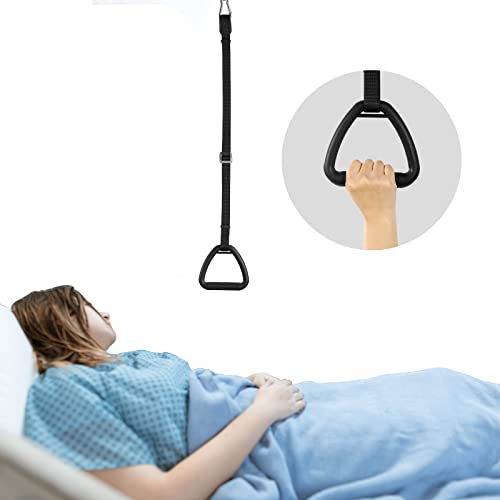
- 440-pound capacity with adjustable handle
- Saves space beside the bed
- Requires a load-bearing mounting surface
Best For: Bed mobility assistance and supported transfers
Adjustable Home Gym Pick
Relife Free-Standing Power Tower

- Nine adjustable pull-up heights
- Supports multiple upper-body exercises
- 400-pound capacity with stability features
Best For: Adjustable whole-family home workouts
Wall-Mounted Strength Pick
Multifunction Wall Pull Up Bar

- 440-pound capacity steel construction
- Supports pull-ups, dips, leg raises, and boxing
- Requires a solid concrete or brick wall
Best For: Permanent home gym installations on suitable walls
Best No-Drill Stability
Sportneer Adjustable Doorway Bar

- Adjusts from 29.5 to 37 inches
- Dual-gear safety lock and anti-slip pads
- Manual maximum load: 297 pounds
Best For: Adults needing a no-drill bar for a solid, compatible doorway
Best Multi-Grip Versatility
Ally Peaks Doorway Pull-Up Bar

- Supports several upper-body exercises
- Fits compatible 24- to 32-inch doorways
- Includes silicone frame-protection pads
Best For: Adults wanting a removable, multi-function doorway bar
Best Bedside Assist – VEVOR Trapeze Bar
For shoppers comparing pull up bars for seniors, the VEVOR Trapeze Bar is designed primarily as a bedside mobility aid rather than a conventional exercise bar. Its free-standing steel frame helps users reposition, sit up, or transfer from bed with an adjustable hand strap.
Best For: Seniors and adults with limited mobility who need bedside assistance for transfers and repositioning.
Pros:
- Heavy-duty Q195 steel frame supports up to 250 pounds.
- Adjustable strap height and horizontal positioning allow a more personalized grip.
- Floor-anchor hardware and reinforced supports are designed to reduce wobbling.
- Fits under various bed types and can also support upper-body recovery exercises.
Cons:
- At 33.3 pounds, it is relatively heavy to move.
- Floor anchoring may be needed for the most secure setup.
- Its main purpose is mobility assistance, not standard pull-up training.
This is a practical choice when safe bed access and transfers matter more than performing full bodyweight pull-ups. Confirm the available floor space and installation requirements before buying.
Best Doorway Workout Option – KAKICLAY Multi-Grip Pull-Up Bar
The KAKICLAY Multi-Grip Pull-Up Bar is a doorway-mounted option for seniors who want a compact way to practice supported upper-body exercises at home. Its padded grips, multiple hand positions, and foldable design provide workout flexibility, but the door frame must meet the stated size and condition requirements.
Best For: Active adults and seniors seeking a space-saving doorway bar for gradual upper-body workouts.
Pros:
- Multiple grip positions support varied pull-up and chin-up training.
- Soft nonslip foam grips are designed for comfort and reduced hand irritation.
- Foldable construction stores easily after use.
- Includes suspension straps and premium silicone door protectors.
Cons:
- Requires a compatible door opening measuring 21.65 to 36.22 inches wide.
- Not suitable for hollow plasterboard walls or weak door frames.
- Doorway mounting may be less suitable for users who need mobility support.
Among pull up bars for seniors, this model makes the most sense for users who can safely exercise from a doorway and want adjustable grips in a compact package. Measure the opening and inspect the frame before installation.
Best Stability Support – Stander Wonder Pole
The Stander Wonder Pole is a tension-mounted floor-to-ceiling support rail for seniors who need help standing, sitting, or transferring around the home. It is not a traditional pull-up bar, but its pivoting grab bar can provide stability beside a bed, chair, toilet, or wheelchair.
Best For: Seniors needing versatile standing and transfer support without drilling into walls.
Pros:
- Installs without wall mounting or drilling.
- Adjusts for flat ceilings from 7 feet to 9 feet 6 inches.
- Pivoting grab bar offers multiple handrail positions.
- Can be used near beds, chairs, toilets, and wheelchairs.
Cons:
- Not compatible with vaulted ceilings.
- Not intended for use in bathtubs or showers.
- Its transfer-support design is different from an exercise pull-up bar.
This is a strong alternative for shoppers using the phrase pull up bars for seniors to mean a reliable standing aid. Choose it when balance and transfers are the priority, and verify ceiling compatibility before purchase.
Best Assisted Training Tower – VigorEdge Assisted Pull-Up Bar
The VigorEdge Assisted Pull-Up Bar is a free-standing power tower that reduces bodyweight resistance with a foot platform and progressive resistance levels. For seniors who want exercise-focused pull up bars, its assisted design can make starting easier while allowing users to work toward unassisted repetitions.
Best For: Beginners and seniors who want structured, progressive pull-up training at home.
Pros:
- Foldable foot platform provides assistance for beginners.
- Three resistance levels support gradual progression.
- Nine height settings accommodate users from 4 feet 8 inches to 7 feet 5 inches.
- Supports pull-ups, knee raises, dips, and stretching with a 330-pound capacity.
Cons:
- Requires floor space for its free-standing power-tower frame.
- It is exercise equipment, not a bedside or transfer aid.
- Users should select assistance and exercises appropriate to their ability.
This tower is the most workout-oriented choice in the group, particularly for seniors who want controlled assistance instead of jumping straight into full pull-ups. Its height adjustment and foot platform make progression more manageable, provided there is enough room for setup.
Bed Mobility Pick – Ceiling-Mounted Bed Trapeze
For seniors who need assistance repositioning or transferring in bed, this ceiling-mounted trapeze is a specialized option among pull up bars for seniors. Its adjustable strap and handle are designed for supported bed mobility rather than general fitness training.
Best For: Adults with mobility challenges using a compatible bed in a bedroom, hospital, or home-care setting.
Pros:
- Supports up to 440 pounds and includes an adjustable handle height.
- Ceiling-mounted design saves floor and bedside space.
- Includes the handle, strap, and mounting accessories.
Cons:
- Requires a concrete masonry ceiling or other load-bearing structure.
- Designed for bed mobility assistance, not a general-purpose workout bar.
This is the most purpose-built choice for seniors who need help pulling up or changing position in bed. Verify the mounting surface and installation requirements before purchase.
Adjustable Home Gym Pick – Relife Free-Standing Power Tower
For seniors seeking pull up bars for seniors with adjustable positioning, the Relife free-standing power tower offers multiple heights and several supported exercises. Its lowest setting is designed for children, while the tower also accommodates pull-ups, dips, push-ups, rows, and knee raises.
Best For: Households wanting an adjustable, multi-exercise strength station with a free-standing design.
Pros:
- Offers nine adjustable heights and three armrest adjustments.
- Supports up to 400 pounds with a safety locknut and four suction cups.
- Combines pull-ups, dips, push-ups, rows, and vertical knee raises.
- Includes assembly instructions and a one-year warranty.
Cons:
- Its 86-inch height may not suit every room.
- Assembly is required, and all screws need to be tightened securely.
The adjustable height makes this more adaptable than a fixed bar, particularly for households with multiple users. Seniors should choose a comfortable setting and use the station only at an appropriate ability level.
Wall-Mounted Strength Pick – Multifunction Wall Pull Up Bar
This wall-mounted option is worth considering when comparing pull up bars for seniors and a permanent home exercise setup is practical. The heavy-duty steel frame supports pull-ups, chin-ups, dips, leg raises, and boxing, with multiple grip positions for varied training.
Best For: Users with a suitable solid concrete or brick wall who want a fixed, multifunction exercise station.
Pros:
- Supports up to 440 pounds.
- Provides multiple grip positions and several exercise options.
- Uses heavy-duty steel with non-slip grips.
- Includes eight concrete anchors for mounting.
Cons:
- Not suitable for drywall, hollow brick, honeycomb brick, or sandwich panels.
- Installation requires a hammer and a drill with a 12 mm bit for concrete.
- Wall-mounted placement is less flexible than a free-standing station.
This bar can provide a stable, space-conscious workout station when installed on the correct structural surface. Carefully confirm the wall type and consider professional installation if drilling and anchoring are unfamiliar.
Best No-Drill Stability – Sportneer Adjustable Doorway Bar
For seniors comparing pull up bars for seniors, the Sportneer is a no-drill doorway option with a safety-lock design and adjustable 29.5- to 37-inch width. Measure carefully before buying, and confirm that the door frame is solid and within the stated size range.
Best For: Adults who want an adjustable, no-drill bar for a compatible solid doorway.
Pros:
- Adjusts from 29.5 to 37 inches for compatible door frames.
- Uses large PVC anti-slip pads and a dual-gear locking system.
- Integrated, sweat-resistant cotton handlebar supports multiple grip positions.
- Includes setup markings, spirit levels, instructions, and a video guide.
Cons:
- Only fits door frames within the specified 29.5- to 37-inch range.
- Not suitable for ceramic tile, glass, or non-solid door frames.
- The manual specifies a 297-pound maximum load, despite the higher advertised construction rating.
This is a feature-rich choice when correct installation and a compatible doorway are priorities. Seniors should measure the frame and follow the 135 kg limit before use.
Best Accessory Bundle – Six-Piece Doorway Resistance-Band Set
This six-piece set gives shoppers looking for pull up bars for seniors more than a bar alone: it includes two resistance bands, two handles, and exercise manuals. Installation requires careful measuring and a solid frame or wooden studs, so verify the mounting location before use.
Best For: Adults who want a doorway or hallway bar bundled with resistance-band accessories.
Pros:
- Includes two resistance bands, two handles, and training manuals.
- Offers width options from 27 to 37, 37 to 47, and 46 to 53 inches.
- Plastic-coated pads are designed to help prevent marks or chipped paint.
- Customer support and a replacement-or-refund warranty are provided.
Cons:
- The 46- to 53-inch model is intended for extra-wide hallways, not standard doorways.
- Hollow-gap door frames are unsuitable for the telescopic bar.
- Hallway installation should be over wooden studs behind drywall.
The included accessories make this a flexible home-training package, but its installation requirements are more involved than the product name may suggest. Measure the opening and check frame construction first.
Best Multi-Grip Versatility – Ally Peaks Doorway Pull-Up Bar
The Ally Peaks bar is a portable multi-grip option for seniors evaluating pull up bars for seniors, with a leverage-mounted design that requires no screws. Check the doorway dimensions and test the bar by pulling down on the grips before exercising.
Best For: Adults seeking one removable doorway bar for pull-ups, push-ups, dips, and hanging crunches.
Pros:
- Supports multiple exercises, including pull-ups, dips, push-ups, and hanging crunches.
- Fits standard doorways measuring 24 to 32 inches wide under the stated conditions.
- Thickened steel construction is rated for up to 440 pounds.
- Silicone contact pads are designed to protect the door frame from marks.
Cons:
- Compatibility depends on doorway depth, trim height, and trim thickness.
- Requires a pre-use security check to confirm it is firmly installed.
- Its many exercise positions may be more capability than some users need.
This bar stands out for versatility and easy removal, provided the doorway matches its detailed fit requirements. Confirm the measurements and stability before each workout.
How We Picked the Best Pull Up Bars for Seniors
We evaluated these options by looking at stability, installation requirements, grip design, adjustability, stated weight limits, and the type of support each product provides. Because “pull-up bar” can describe very different equipment, we included both exercise-focused models and assistive devices such as bed trapezes and transfer poles.
We also considered whether a product requires drilling, permanent mounting, or a specific doorway or ceiling structure. A high weight rating is useful, but it does not by itself guarantee safe use; the frame, mounting surface, fasteners, and user’s movement pattern all matter.
Quick Comparison
| Type | Best for | Installation | Key consideration |
|---|---|---|---|
| Bed trapeze | Repositioning and transfers | Free-standing or ceiling-mounted | Verify placement, reach, and bed compatibility |
| Transfer pole | Standing and balance support | Tension-mounted | Requires a structurally sound floor and ceiling |
| Doorway bar | Light strength training | No-drill or removable | Check doorway width, trim, and frame strength |
| Wall-mounted bar | Regular pull-ups and dips | Permanent mounting | Use appropriate anchors and inspect fasteners |
| Power tower | Supported home workouts | Freestanding assembly | Needs floor space and a stable, level surface |
Key Buying Factors for Pull-Up Bars for Seniors
Purpose and Assistance Level
For bed mobility, a trapeze handle or ladder-style aid is usually more appropriate than a conventional pull-up bar. For standing support, a transfer pole may be easier to use. Users who already have good balance and want exercise can consider a doorway bar, wall-mounted unit, or assisted power tower.
Stability and Installation
Measure the doorway, ceiling height, bed area, or wall before buying. No-drill doorway models are convenient but still need a compatible, undamaged frame. Tension poles should be installed on solid surfaces, while wall-mounted bars require secure attachment to structural framing or correctly rated masonry anchors.
Grip, Height, and Adjustability
Multiple grip positions can reduce hand and wrist strain, but wide or angled grips may not suit every user. Look for reachable handles, comfortable padding, and height adjustment that allows mounting without unsafe stretching or jumping.
Weight Capacity and Supervision
Compare the stated capacity with the user’s body weight and the force created during movement. Assisted transfers can place different loads on equipment than slow, controlled exercises. Anyone with balance limitations, joint pain, osteoporosis, or recent surgery should ask a clinician or physical therapist how the equipment should be used.
Safety Checks
Inspect bolts, hooks, pads, welds, and mounting points regularly. Use a non-slip floor surface, keep the surrounding area clear, and avoid using a bar for full body weight unless it is specifically designed and securely installed for that purpose.
Who Should Buy Which Pull Up Bars for Seniors?
- For bed transfers: Choose a bed trapeze or bed mobility aid with a reachable handle and a suitable support structure.
- For standing assistance: A properly installed tension-mounted transfer pole is often more practical than a workout bar.
- For gentle doorway exercise: Select a removable, multi-grip bar only if the doorway and frame meet the manufacturer’s requirements.
- For progressive strength training: Consider an assisted or freestanding power tower that supports controlled movement without jumping.
- For permanent home-gym use: A wall-mounted bar can provide the strongest setup when installed into appropriate structural support.
The best pull-up bars for seniors are the ones that match the user’s actual task and physical ability. Prioritize secure installation, easy access, and controlled movement over the highest advertised capacity or the greatest number of features.