
Foldable slant boards can make calf stretching, squat work, and mobility training more comfortable and more consistent at home or in the gym.
With so many materials, angle settings, and weight capacities available, the best choice depends on how you plan to use it and how portable you need it to be.
Best 10 Foldable Slant Boards Picks for 2026
Adjustable Wooden Pick
5-Angle Foldable Calf Stretcher
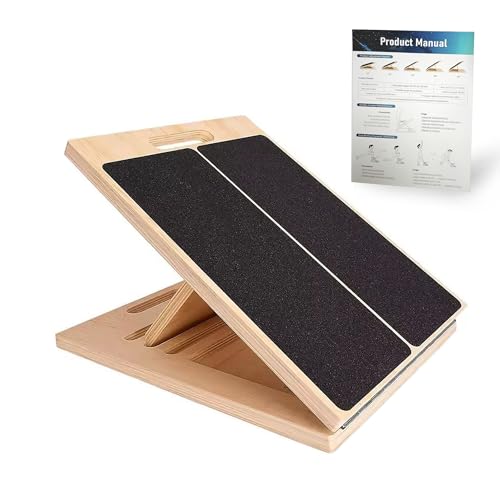
- 5 incline angles for progression
- Folds flat for compact storage
- 350 lb capacity with non-slip surface
Best For: Home gym stretching, rehab, and squat support
Writing Surface Option

- Angled surface supports writing posture
- Folds for backpack or desk storage
- Two clips hold up to 20 sheets
Best For: Writing, reading, and office use
Portable Hardwood Pick

- Four incline levels for mobility work
- 5 lb build with built-in handle
- 500 lb capacity and anti-slip surface
Best For: Portable calf stretching and squat support
ATG Training Pick
Dual-Platform Adjustable Metal Wedge

- Two independent platforms for varied stances
- Four incline levels for progression
- 900 lb frame capacity with anti-slip grip
Best For: ATG work, plantar fasciitis relief, and heavy-duty squat support
Versatile 2-in-1 Pick
2-in-1 Wooden Balance & Slant Board

- Balance board and slant board in one
- Four incline positions for varied stretching
- Wood build with non-slip protection
Best For: People who want one board for stretching, balance, and standing-desk support
PT-Approved Foam Option

- Five adjustable angles for stretching
- Lightweight foam wedge for portability
- Aims to support common foot and calf issues
Best For: Lightweight calf stretching and mobility work at home or on the go
Heavy-Duty Metal Choice
Steel Adjustable Incline Board
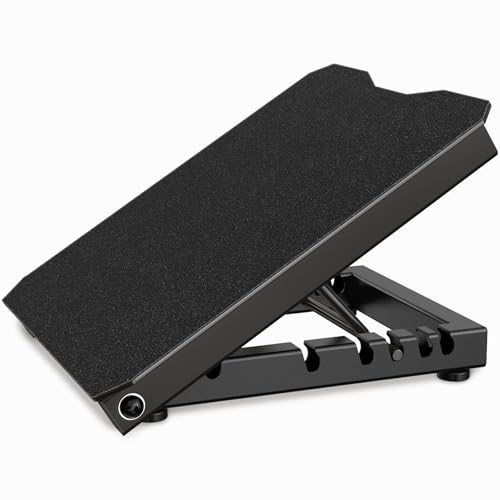
- Steel build for extra stability and durability
- Five angles from 15° to 40°
- 600-lb max weight recommendation
Best For: Frequent training, heavier users, and home or commercial gym setups
Portable Recovery Slant Board
Adjustable Wooden Calf Stretcher

- 4.5 lb wooden board for easy portability
- 4 adjustable angles: 30°, 35°, 40°, 45°
- Good for stretching, squats, and recovery work
Best For: Lightweight portability and simple rehab-friendly stretching
Bamboo Stability Slant Board

- Bamboo build with 300 lb capacity
- Folds flat and has a built-in carry handle
- Non-slip pads and 4 marked angles for stable use
Best For: Stable, foldable stretching with strong support
Everyday Stretch Slant Board

- Lightweight 4.6 lb wooden construction
- Five angle settings from 23° to 45°
- Includes training poster and instructions
Best For: Portable daily stretching with more angle variety
Adjustable Wooden Pick – 5-Angle Foldable Calf Stretcher
This foldable slant board is a practical pick if you want one wooden incline board that handles stretching, mobility work, and light training. With 5 adjustable angles and a 350 lb capacity, it’s built for everything from calf stretches and rehab drills to squats and Pilates.
Best For: Home gym users, rehab routines, and anyone who wants a compact wooden slant board with multiple incline options.
Pros:
- 5 adjustable angles: 20°, 30°, 35°, 40°, and 45°
- Foldable design stores flat for easy placement in a closet, under a bed, or in a gym bag
- Heavy-duty non-slip surface and 350 lb weight capacity
- Arrives fully assembled and ready to use
Cons:
- Wooden build is less lightweight than simple plastic options
- Only one board is included, so it’s not a dual-platform design
Overall, this is a versatile foldable slant board for buyers who want adjustable angles and a sturdy wooden feel without extra setup. It’s especially appealing if you need one board that can move between mobility work, stretching, and basic fitness use.
Writing Surface Option – Foldable Slanted Clipboard
If you need a foldable slant board for writing rather than fitness, this sloped clipboard is designed to improve posture, legibility, and endurance at the desk. Its 14 x 12 inch work surface, tilt-friendly shape, and dual metal clips make it a simple option for writing, reading, or drawing.
Best For: Students, office users, and anyone looking for a portable angled writing surface.
Pros:
- Adjustable slanted surface can improve writing posture and reduce strain
- Folds for easy desk or backpack storage
- Two metal clips hold up to 20 sheets securely
- Lightweight plastic body is easy to carry and clean
Cons:
- Designed for paper work, not stretching or exercise
- Plastic construction is less heavy-duty than wooden or metal boards
This is a useful foldable slant board if your main goal is a more comfortable writing angle. It’s best viewed as a portable productivity tool, not a fitness wedge.
Portable Hardwood Pick – Adjustable Calf Stretch Wedge
This wooden slant board is built for calf stretching, ankle mobility, and squat support in a compact, portable format. At just 5 lbs with a built-in handle, it’s easy to move between home, gym, and office use while still offering multiple incline levels.
Best For: Users who want a portable wooden wedge for mobility work, heel stretches, and squat positioning.
Pros:
- Four incline levels: 20°, 25°, 30°, and 40°
- Lightweight 5 lb build with built-in handle
- 500 lb weight capacity with anti-slip surface
- Useful for calf stretching, balance work, and squat training
Cons:
- Fewer angle options than some adjustable competitors
- Wooden construction may be bulkier than ultra-light folding boards
For buyers comparing foldable slant boards, this model stands out for its strong weight rating and simple portability. It fits best if you want a sturdy hardwood wedge for recurring lower-body mobility work.
ATG Training Pick – Dual-Platform Adjustable Metal Wedge
If you want a foldable slant board for serious lower-body training, this metal wedge stands out with two independent platforms and four incline levels. It’s designed for ATG-style split squats, calf stretching, and knee-over-toes positioning, while also serving as a stable squat wedge for home or clinic use.
Best For: ATG training, plantar fasciitis relief routines, and users who want a dual-platform metal design.
Pros:
- Two separate platforms allow asymmetric foot angles and wider stances
- Four incline levels support progressive mobility and stretch work
- Metal frame is rated up to 900 lb capacity
- Anti-slip rubber top and base mats help prevent shifting
Cons:
- Heavier and more rigid than wooden fold-flat boards
- Compact size may feel specialized rather than all-purpose
This is the most training-focused option in the group, especially if you care about ATG movements and stability under load. It makes sense for buyers who want a durable, high-capacity wedge with more positioning flexibility than a standard single-platform board.
Versatile 2-in-1 Pick – 2-in-1 Wooden Balance & Slant Board
If you want foldable slant boards that do more than one job, this 2-in-1 wooden model is built for stretching and balance work. It shifts between a balance board and a slant board with four incline positions, making it a practical option for physical therapy, standing desks, and basic home mobility routines.
Best For: Users who want one compact board for stretching, balance training, and standing-desk use.
Pros:
- 2-in-1 design works as both a balance board and slant board
- Four adjustable incline positions add flexibility for different stretches
- Heavy-duty wood construction with non-slip surface and anti-skid feet
- Rated to support up to 350 pounds, with a compact 4-pound build
Cons:
- Wood construction may be less lightweight than foam alternatives
- Not foldable in the literal sense; it is an adjustable dual-purpose board
This is a strong pick if you want a sturdy, multipurpose board for rehab-style stretching and desk use. The combination of adjustable incline settings and balance training gives it broader utility than a basic wedge.
PT-Approved Foam Option – 5-Angle Calf Stretch Wedge
Among foldable slant boards and incline wedges, this foam model stands out for simple calf stretching and mobility work. It offers five adjustable angles and a low-profile foam design, which makes it easy to use for exercise, squats, ankle mobility, and physical therapy routines.
Best For: Buyers who want a lightweight wedge for calf stretching, mobility drills, and rehab-style use.
Pros:
- Five adjustable angles for different stretch depths
- Recommended by physical therapists in the product notes
- Designed to help with plantar fasciitis, Achilles tendon, shin splint, and calf strain recovery
- Very lightweight at 10.56 ounces and compact in size
Cons:
- Foam construction may not feel as rigid as metal or wood options
- Lower stated weight capacity than the steel alternative in this roundup
This is the simplest, most portable choice here, especially if you want an incline wedge for stretching rather than a heavier training platform. The adjustable angles and therapy-focused design make it easy to slot into a daily mobility routine.
Heavy-Duty Metal Choice – Steel Adjustable Incline Board
If you need foldable slant boards with a more rugged build, this steel incline board is the most heavy-duty option in the group. It is designed for calf stretching, squat warm-ups, balance training, and pre- or post-workout mobility, with five angle settings and a high weight limit.
Best For: Heavier users or anyone who wants a sturdy metal board for frequent training and stretching.
Pros:
- Steel construction is built for durability and stability
- Five adjustable angles from 15° to 40°
- High 600-pound maximum weight recommendation
- Non-slip surface and rubber feet add traction and floor protection
Cons:
- At 11.3 pounds, it is heavier than foam or wood alternatives
- May be more board than some casual users need
This model makes sense if stability and load capacity matter more than portability. Its steel frame, fixed assembly, and broad adjustment range make it a practical long-term training tool for home gyms or commercial settings.
Portable Recovery Slant Board – Adjustable Wooden Calf Stretcher
If you want foldable slant boards that are simple to move and easy to use, this wooden option is built for everyday stretching and rehab-style routines. At 4.5 lb, it’s lightweight enough for home, office, gym, or clinic use, and its 4-position incline makes it easy to dial in the right stretch for calves, ankles, and lower legs.
Best For: Users who want a lightweight, adjustable wooden board for stretching and recovery work.
Pros:
- Lightweight 4.5 lb build for portability
- Adjusts to 4 angles: 30°, 35°, 40°, and 45°
- Useful for calf stretching, squats, and weight-bearing exercise
- Designed for flexibility, mobility, and recovery-focused routines
Cons:
- No carry handle or folding-flat claim in the notes
- Angle range starts higher than some beginner boards
This is a practical pick if you want a compact wooden slant board with straightforward angle options and broad use across fitness and rehab settings.
Bamboo Stability Slant Board – Foldable Incline Trainer
Among foldable slant boards, this bamboo model stands out for its steadier feel and more structured design. It supports up to 300 lb, folds flat in seconds, and includes angle markings plus a carry handle, making it a strong fit for consistent calf stretching, squat work, and mobility training at home or on the go.
Best For: People who want a foldable bamboo board with a higher weight capacity and secure footing.
Pros:
- Durable bamboo construction with 300 lb capacity
- Folds flat in seconds and includes an integrated carry handle
- 4 angles: 15°, 20°, 25°, and 30° with clear markings
- Textured foot surface and non-slip base pads for stability
Cons:
- Heavier than the lightest wooden options at 5.8 lb
- Angle range tops out at 30°
If you value stability and easy storage, this board offers a balanced mix of portability, safe footing, and measured progression.
Everyday Stretch Slant Board – 5-Angle Portable Calf Board
This foldable slant board is geared toward simple calf stretching, with a lightweight wooden design and five angle settings to choose from. At 4.6 lb, it’s easy to carry between home and gym, and the included training poster adds a helpful starting point for beginners who want a ready-to-use stretching tool.
Best For: Beginners and casual users who want a portable board with extra angle options.
Pros:
- Lightweight 4.6 lb wooden build for easy transport
- 5 angles: 23°, 30°, 35°, 40°, and 45°
- Includes a workout poster and instructions
- Rated for up to 300 lb
Cons:
- No explicit non-slip base or handle mentioned in the notes
- Less structured feature set than higher-end bamboo options
This is a straightforward choice if you want more angle variety without adding much weight or complexity.
How We Picked These Foldable Slant Boards
We focused on the features that matter most for real-world use: stable construction, useful angle adjustment, foldability or easy storage, weight capacity, and whether the design suits stretching, squat support, or rehab-style mobility work. We also looked for boards that offer enough surface area for secure footing and practical portability for home or travel use.
Quick Comparison: What Matters Most
Not every slant board is built for the same job. Wood models often feel more traditional and comfortable for stretching, while metal options usually emphasize higher load ratings and durability. Foam and bamboo designs can be lighter to carry, and combination boards may add balance or multi-use training value. If you plan to switch between calf work, ATG-style squats, and general mobility, a more adjustable model usually offers the best long-term value.
Key Buying Factors for Foldable Slant Boards
Angle Range and Adjustability
More angle settings give you better progression. Beginners may prefer a gentler incline, while experienced users often want higher angles for deeper calf loading and squat variation.
Stability and Weight Capacity
Look for a board that feels solid under full bodyweight. Higher weight capacities are especially useful for squats, dynamic stretching, and heavier users who want extra confidence during training.
Surface Grip and Foot Comfort
A non-slip surface helps reduce sliding, especially when used with socks or during longer stretching sessions. Comfortable foot placement is important if you plan to stay on the board for mobility drills or rehab routines.
Portability and Storage
Foldable Slant Boards should be easy to store, but portability should not come at the expense of stability. If you need to move the board often, look for a design with a manageable weight and a secure folding mechanism.
Material and Use Case
Wood is a strong all-around choice for home fitness and stretching. Metal tends to be a better fit for maximum durability and heavier loads. Bamboo and composite designs can offer a good balance of lightness and style, while 2-in-1 boards may appeal to users who want more than a basic incline surface.
Who Should Buy Which Foldable Slant Boards?
If you mainly want calf stretching and plantar fasciitis support, choose a stable, adjustable board with a comfortable incline and solid traction. For squat training and ATG mobility, prioritize high weight capacity and multiple angle settings. If space is tight or you plan to carry it between locations, a lighter foldable model makes more sense. Users who want one tool for balance, mobility, and stretching should consider a multi-function board rather than a single-purpose wedge.
In short, the best Foldable Slant Boards are the ones that match your training style, storage needs, and comfort level. A well-chosen board can make daily mobility work easier to stick with and more effective over time.