
If you are searching for an Ankle Balance Board review that focuses on rehab-style stability work, this model is built around a narrow but useful job.
It targets ankle strength, balance training, and foot mobility rather than trying to be a general fitness toy.
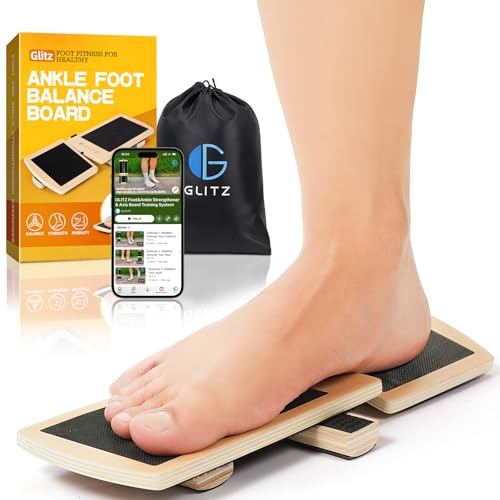
Ankle Balance Board Review Summary
The Ankle Balance Board makes the most sense for buyers who want a compact, guided way to work on ankle control, foot strength, and balance after strain or as part of regular mobility work.
The listing positions it as an alternative to wobble boards, balance cushions, and foam pads, and the design matches that claim with adjustable balance bars, a non-slip surface, and a portable plywood build.
Verdict: this is a focused tool for steady, repeatable lower-leg work.
It is best for people who value structure, portability, and targeted ankle exercises more than broad athletic versatility.
Review Scorecard
| Category | Score | Rationale |
|---|---|---|
| Ankle stability training | 9/10 | Built specifically for balance control and targeted ankle work. |
| Rehab and mobility fit | 8/10 | Listing emphasizes sprains, plantar fasciitis, Achilles tendonitis, and gait support. |
| Build and safety | 8/10 | Birch plywood construction plus anti-slip pads suggest a sturdy platform. |
| Adjustability | 9/10 | Velcro-attached balance bars allow positioning changes for different exercises. |
| Portability | 9/10 | Compact and lightweight enough for home, therapy, work, or travel use. |
| Ease of use | 7/10 | The included video guide helps, but the tool still depends on proper form. |
| Versatility | 6/10 | Strong for foot and ankle work, less useful as an all-purpose balance trainer. |
Key Features and Specifications of Ankle Balance Board
The product is a foot and ankle training board designed for stability exercises, physical therapy routines, and balance practice.
The core idea is simple: create an unstable surface that forces the ankle and foot to work harder in a controlled way.
Key listing details:
| Feature | Evidence from listing |
|---|---|
| Primary use | Ankle strengthening, stabilization, balance training, and mobility exercises |
| Adjustment | Velcro-attached balance bars with adjustable positioning |
| Materials | Premium birch plywood |
| Surface | Black anti-slip surface pads |
| Portability | Lightweight and compact for home, therapy, outdoors, or work |
| Included guidance | Video guide for form and exercise support |
The seller also claims it can help with common discomfort points such as ankle sprains, plantar fasciitis, Achilles tendonitis, and other foot injuries.
That should be read as a targeted fitness-and-rehab claim, not a medical guarantee.
Still, it is the right category of product for people looking to build a routine around those concerns.
Another useful detail is the way the board is framed for both athletes and patients.
That usually signals a product that sits between therapy equipment and light performance training, which is exactly where this design belongs.
Pros and Cons of Ankle Balance Board
Pros
- Purpose-built for ankle stability instead of being a generic balance platform.
- Adjustable balance bars add variety and let users change the challenge.
- Birch plywood and anti-slip pads should support a more secure feel.
- Compact size makes it practical for repeated use in small spaces.
- The video guide lowers the barrier for buyers who want direction.
Cons
- It is specialized, so buyers wanting a full-body trainer may outgrow it fast.
- The benefits depend heavily on using it consistently and with proper form.
- People with acute pain or limited mobility may need professional guidance first.
- The listing promises a lot around discomfort relief, but that is still a listing claim rather than a guarantee.
Overall, the pros point to a serious niche tool, while the cons mostly come from the fact that this is not a universal fitness board.
Who Should Buy Ankle Balance Board?
This product is a good fit for people who want a simple, repeatable way to train ankles and feet.
That includes athletes working on balance, people rebuilding confidence after a sprain, and anyone doing mobility work for the lower leg.
It also makes sense for physical therapists, personal trainers, or home users who want a compact board that can travel easily between spaces.
The adjustable bars and anti-slip surface suggest it is meant for structured sessions rather than casual wobbling.
You should probably skip it if you want a general balance trainer for core work, dynamic cardio, or whole-body conditioning.
It is also not the first choice if you need a heavily cushioned surface or a very low-intensity option.
If your main goal is ankle control, foot strength, and stability practice, this is the right type of product.
If your goal is broad athletic variety, look elsewhere.
How the Ankle Balance Board Fits Training
Balance Control
The main value here is controlled instability.
The board is designed to make the foot and ankle manage small corrections, which is the kind of work that can sharpen balance and body control over time.
Targeted Foot Work
Because the listing mentions tilt and torque movements of the footboard and heelboard, the device appears intended for more than just standing practice.
That is useful for users who want focused lower-leg activation rather than a one-position balance challenge.
Portability and Routine
Its compact, lightweight format is a meaningful advantage.
Tools that are easy to store and move are more likely to get used regularly, and this one is clearly positioned for home, therapy, work, or outdoor sessions.
Safety and Form
The included video guide matters because balance tools can be misused.
A secure surface helps, but form still determines whether the board feels productive or awkward.
For buyers new to rehab-style training, guidance is a real plus.
Alternatives to Ankle Balance Board
If you want a broader balance-trainer shape, consider a wobble board for a more traditional unstable platform.
If you prefer softer underfoot instability, a balance cushion is a common alternative for lighter balance and posture work.
If you need a simple rehab-friendly option, a foam balance pad is worth comparing because it is less aggressive and usually easier to start with.
If you want a more gym-style balance device, a BOSU balance trainer offers a different style of instability and a wider exercise range.
For people focused on foot and ankle strengthening specifically, a plantar fasciitis foot rocker may be a more direct match.
Is Ankle Balance Board Worth It?
Yes, if you want a focused ankle and foot training tool with a portable, structured design.
The strongest case for it is stability work: adjustable support, anti-slip construction, and a format that fits rehab-style routines.
It is less compelling if you want a general exercise accessory or a soft entry point into balance training.
But for buyers who care about ankle control, foot strength, and consistent mobility practice, the Ankle Balance Board is a sensible buy.