
Resistance Bands for Working Out is a straightforward five-level set for people who want a compact way to train, stretch, and rehab without bulky equipment.
Resistance Bands for Working Out Review Summary
This Resistance Bands for Working Out review is best read as a buyer’s guide for anyone who wants a simple, portable resistance system that can cover warmups, mobility work, and light-to-moderate strength training.
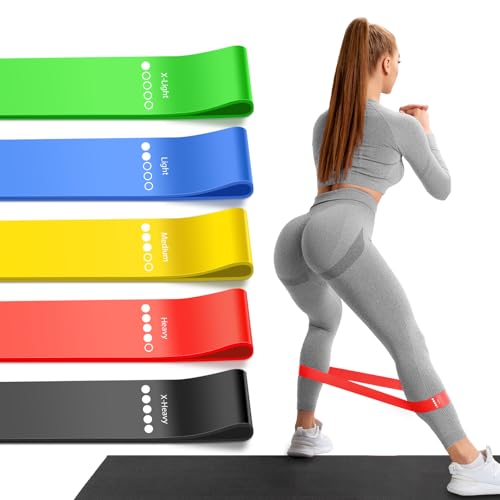
The listing points to a TPE build, five color-coded resistance levels, and an included woven pouch, which makes the set especially appealing if you want one kit that can move between home, gym, office, and travel use.
Verdict: this is a sensible pick for beginners, casual exercisers, and people doing flexibility or rehab-oriented training.
It is less compelling if you want a heavy-duty strength tool for advanced progressive overload, but the format is practical and broad enough for everyday fitness.
Review Scorecard
| Category | Score | Rationale |
|---|---|---|
| Portability | 9/10 | The bands are compact and include a woven pouch, so storage and travel are easy. |
| Exercise Variety | 8/10 | Five resistance levels support stretching, Pilates, yoga, and strength work. |
| Full-Body Use | 8/10 | The listing specifically targets hips, thighs, arms, shoulders, back, chest, knees, and ankles. |
| Material Appeal | 7/10 | TPE is presented as odor-free and consistent in tension, which is useful for repeated sessions. |
| Beginner Friendliness | 9/10 | Color-coded levels and broad use cases make the set easy to approach. |
| Serious Strength Training | 5/10 | Useful for many movements, but the listing is still oriented toward bands rather than heavy resistance systems. |
Key Features and Specifications of Resistance Bands for Working Out
The core appeal of Resistance Bands for Working Out is its simplicity.
The set uses high-quality TPE according to the listing, and it is designed to provide consistent tension over extended use while staying odor-free.
That matters because a resistance band set lives or dies on whether it feels predictable and pleasant to use across many sessions.
The package includes five color-coded bands with distinct resistance levels.
That is the most important practical detail because it lets you scale exercises gradually instead of treating every movement the same.
For a buyer building a home routine, this can reduce guesswork and make it easier to progress from mobility work to more demanding repetitions.
The product is positioned as a full-body training tool.
The listing specifically mentions use for hips, thighs, arms, shoulders, back, chest, knees, and ankles, which signals that this is not just a lower-body accessory or a stretch strap replacement.
It is meant to be a general-purpose training and movement aid.
Portability is another clear selling point.
The bands are compact and come with a woven pouch, so they are easy to keep in a drawer, toss in a bag, or use in a limited-space environment.
If your workout setup changes often, that kind of packability is more valuable than a larger, more specialized system.
Key listing details:
- Five color-coded resistance bands
- TPE material
- Odor-free design claim
- Consistent tension claim
- Included woven pouch
- Intended for strength training, stretching, Pilates, yoga, and physical therapy
- Suitable for home, gym, outdoor, and office use
Pros and Cons of Resistance Bands for Working Out
Pros
- Very portable thanks to the compact format and included pouch.
- Flexible across workout styles including stretching, Pilates, yoga, and strength training.
- Five resistance levels give you room to progress without buying multiple separate tools.
- Broad body coverage makes it useful for both upper- and lower-body work.
- Beginner-friendly presentation with clear color coding and simple use cases.
Cons
- Not a heavy-load solution if you need a more demanding strength tool.
- Band training can feel limited if you prefer fixed handles, cables, or machine-style resistance.
- The set is general-purpose rather than specialized for one sport or one rehab protocol.
Who Should Buy Resistance Bands for Working Out?
Buyers who want a low-clutter workout tool should pay attention to this set.
It fits people building a home exercise routine, commuters who want a bag-friendly option, and anyone who needs something easy to use in a small space.
The broad use cases make it especially attractive if you want one kit for warmups, stretching, accessory work, and lighter resistance sessions.
It also makes sense for beginners.
The five resistance levels and color coding create a clear entry point, so you are not forced to guess how hard a band should feel before you start.
That lowers the friction for people who are new to band-based training or returning after a long break.
The set is also a reasonable choice for mobility, yoga, Pilates, and physical therapy style work, because the listing explicitly supports those categories.
If your priority is controlled movement, flexibility, and light strengthening around joints and smaller muscle groups, the format matches the use case well.
Who should skip it?
Advanced lifters who want strong progressive resistance may outgrow it quickly.
If your workouts depend on very high tension, machine-style stability, or specialty athletic programming, a general band set will probably feel like a convenience tool rather than a primary training system.
How Resistance Bands for Working Out Performs in Daily Use
Tension Progression
The five resistance levels are the most important functional feature because they let you match the band to the movement.
That matters more than raw marketing language.
A lighter band can help with warmups and mobility, while a firmer one can support more challenging accessory exercises.
Comfort and Handling
The TPE material is presented as odor-free and consistent, which suggests a cleaner everyday experience than low-grade bands that feel harsh or smell unpleasant out of the package.
For regular use, comfort and predictability often matter more than flashy extras.
Space and Travel Fit
The included woven pouch makes the set easy to move and store.
That gives it a strong practical advantage for people who train in multiple locations or do not want a permanent setup in a home gym.
It is the kind of product that stays usable because it is easy to keep nearby.
Movement Coverage
Because the listing calls out hips, thighs, arms, shoulders, back, chest, knees, and ankles, the set is built for full-body work instead of one narrow routine.
That broad coverage is useful if you want one purchase to support multiple goals across the week.
Alternatives to Resistance Bands for Working Out
If you want a different style of band training, Fit Simplify resistance bands are a common Amazon alternative for users who want a familiar loop-band format: Fit Simplify resistance bands.
If you prefer a more premium-looking, higher-coverage set, WODFitters resistance bands are another credible option for general training and stretching: WODFitters resistance bands.
If your priority is rehab and mobility rather than general workouts, TheraBand resistance bands are worth considering because the brand is strongly associated with therapy-oriented band work: TheraBand resistance bands.
For buyers who want a kit with more accessories and training variety, Letsfit resistance bands are often searched as a broader home-workout bundle: Letsfit resistance bands.
Is Resistance Bands for Working Out Worth It?
Yes, if you want a compact, versatile, beginner-friendly band set for everyday movement and lighter strength work. The five resistance levels, TPE construction, and included pouch make it practical for home use and travel, and the listing supports a wide range of training styles.
No, if you need serious resistance for advanced strength progression. In that case, you will probably want a more specialized system.
For most general fitness buyers, though, Resistance Bands for Working Out is a useful, low-friction purchase that solves the portability problem without adding clutter.