
If you are looking for a Rollga PRO foam roller review, the key appeal is simple: it is shaped to work around the spine while still delivering deeper pressure than a basic cylinder.
That makes it especially relevant for people who want targeted relief, not just a generic roll.
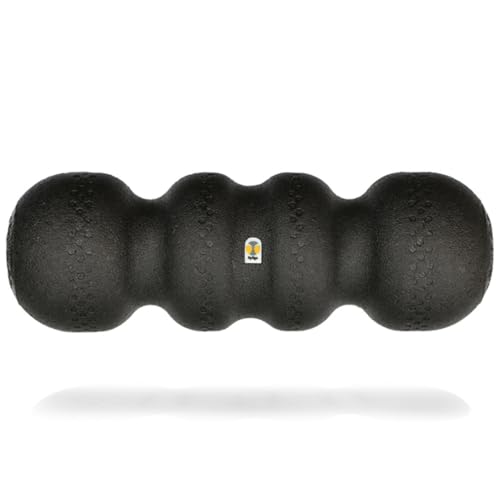
Rollga PRO Review Summary
The Rollga PRO is aimed at buyers who want a firmer, more specialized foam roller for back care, mobility work, and post-exercise recovery.
Its patented groove-based shape is the main differentiator: instead of pressing flat into the back, it is designed to support the spine and shoulder blades while the raised sections target surrounding muscles.
That is a meaningful fit if your main complaint is upper- or lower-back tightness and you want a roller that feels more deliberate than a plain tube.
It is also a better match for experienced users than for complete beginners.
The listing says the PRO version is 20% harder than the standard Rollga and is intended for people with foam rolling or deep tissue massage experience.
In practice, that suggests a tool for users who already know they can tolerate firmer pressure and want something that digs in more aggressively.
If you want a comfortable, travel-friendly roller that can still support more than one body area, this is a credible option.
Review Scorecard
| Category | Score | Buyer-focused rationale |
|---|---|---|
| Back relief design | 9/10 | Contoured grooves are explicitly built to support the spine and shoulder blades. |
| Deep pressure | 9/10 | Raised bumps and harder construction are positioned for deeper tissue work. |
| Recovery versatility | 8/10 | The listing supports back, legs, arms, neck, and feet use. |
| Flexibility work | 8/10 | Marketed for yoga, Pilates, and general range-of-motion routines. |
| Portability | 8/10 | Lightweight and durable enough for home, gym, or travel use. |
| Beginner friendliness | 6/10 | The harder PRO version is better suited to users who already tolerate firm rolling. |
Key Features and Specifications of Rollga PRO
Rollga positions this model as a high-density foam roller with a patented contoured surface.
The shape is the defining feature: grooves are meant to protect the spine and bone while the raised sections reach deeper into muscle tissue.
That is different from a standard smooth roller, which usually spreads pressure more evenly and can feel less precise on the back.
The listing also stresses that this is not a soft, introductory roller.
The PRO version is described as 20% harder than the standard Rollga, and the brand calls it better for deep digging and muscle release.
That matters because density is one of the main reasons people either like or dislike a foam roller.
If you want a gentler mobility aid, this may feel too aggressive.
If you want more direct pressure, that same firmness becomes the selling point.
Useful listing facts:
- Brand: Rollga
- Model: PRO
- Type: high-density foam roller
- Length: 18 inches
- Main design claim: patented grooves intended to protect the spine and bone
- Intended use: back pain relief, muscle recovery, warm-ups, flexibility work, and deep tissue massage
- Body areas mentioned: neck, back, legs, arms, and feet
- Portability claim: lightweight and durable for home, gym, or travel
The product description also ties it to a broad use case set: pre-workout warm-ups, post-workout soreness relief, yoga, Pilates, and physical therapy-style routines.
That makes it a multi-purpose recovery tool rather than a one-job accessory.
Pros and Cons of Rollga PRO
Pros
- The contoured design is more specific than a standard roller and is clearly aimed at spine-safe back rolling.
- The raised grooves are meant to create deeper pressure, which is useful for users who want a firmer massage feel.
- It is marketed for multiple recovery contexts, including warm-up, soreness relief, and flexibility work.
- The 18-inch size should be compact enough for bags, shelves, or a car trunk.
- The brand claims it can be used across several body zones, not only the back.
Cons
- The harder PRO build will not suit everyone, especially if you prefer softer rolling.
- The specialized shape may feel less intuitive than a basic cylinder if you are new to foam rolling.
- The strongest benefit depends on whether the grooves line up with your body and rolling style.
- Buyers who want simple all-purpose comfort may not need the extra firmness or contoured design.
Overall, the balance is clear: this is a purpose-built recovery tool, not a casual fitness accessory. That is a strength if you want control and pressure, but it is also the main reason some shoppers should look elsewhere.
Who Should Buy Rollga PRO?
The Rollga PRO makes the most sense for people who already use foam rollers and want something more targeted.
If you regularly work on back tension, post-workout soreness, or mobility, the contoured shape gives you a more specialized tool than a generic foam cylinder.
It also fits buyers who want a firmer feel.
The brand explicitly says the PRO version is harder than the standard one and is best for people with foam rolling or deep tissue massage experience.
That makes it a better match for athletes, active adults, yoga or Pilates users, and anyone who knows they prefer strong pressure.
You should probably skip it if you are looking for a soft recovery aid, a beginner-friendly first roller, or the simplest possible design.
A basic smooth foam roller or a softer density option may be easier to live with if your main goal is gentle self-massage rather than deeper work.
How the Contoured Design Changes Rolling
Spine Support Matters
The big idea behind the Rollga PRO is that it tries to make back rolling feel safer and more targeted.
The grooves are meant to support the spine and shoulder blades rather than pressing directly into them, so the pressure lands on surrounding tissue instead of the bony center line.
Deeper Pressure Without a Simple Cylinder
The raised bumps are designed to reach deeper into muscle.
That can be useful if a smooth roller feels too mild or if you want more focused pressure during recovery sessions.
The tradeoff is predictability: a firmer, shaped roller can feel more selective and less forgiving than a basic one.
Better for Structured Recovery
The listing’s use cases point to a user who already has a routine: warm up, recover, stretch, repeat.
That is where the PRO should work best.
It looks better suited to structured sessions than casual lounging, especially if you want to pair rolling with yoga, Pilates, or physical therapy-style work.
Alternatives to Rollga PRO
If you want a different feel or format, there are several credible Amazon search alternatives worth considering:
- TriggerPoint GRID Foam Roller
- RumbleRoller Foam Roller
- OPTP Foam Roller
- Amazon Basics High-Density Foam Roller
These options are useful if you want a more familiar cylinder shape, a different texture, or a simpler first foam roller.
A standard roller may be easier if the Rollga PRO sounds too specialized, while a more aggressive textured model may appeal if your main priority is deep pressure.
Is Rollga PRO Worth It?
The Rollga PRO is worth it if you want a firmer, more specialized foam roller with a design that clearly prioritizes back support and deeper pressure.
It is a strong fit for experienced users who want targeted recovery rather than a soft, general-purpose roller.
If you are new to foam rolling or want the mildest option available, this is probably not the first model I would choose.
But if you already know you like firm pressure and want a contoured shape that tries to work around the spine, the Rollga PRO is a sensible buy.