
The best balance boards for home workouts make it easier to train stability, coordination, and core control without filling your space with bulky equipment. The right design depends on your experience, available room, and whether you prefer simple balance practice or guided, interactive workouts.
We compared these 10 options by board style, traction, weight capacity, versatility, and comfort so you can choose a trainer that fits your routine and supports confident practice at home.
Best 10 Balance Boards for Home Workouts Picks for 2026
Best Classic Wobble Board
Amazon Basics Wood Balance Trainer
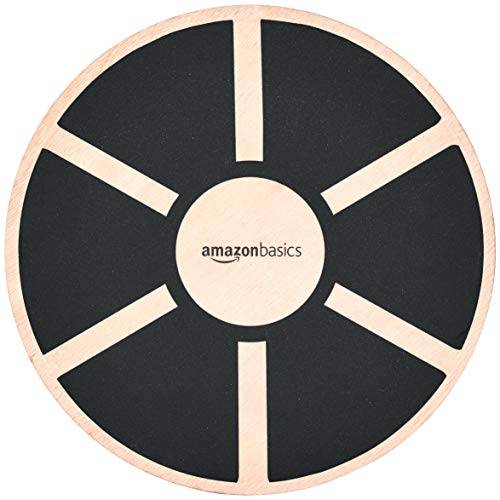
- Solid wood platform supports up to 265 pounds
- Non-slip surface for balance and core exercises
- Compact design for home workout spaces
Best For: Traditional balance, posture, and core training
Best Low-Impact Cardio Board

- Side-to-side motion supports low-impact cardio
- Includes resistance bands and an LCD monitor
- 300-pound capacity with quiet operation
Best For: Joint-friendly cardio and balance sessions at home
Best Balance Pad
ProsourceFit Cushioned Foam Mat
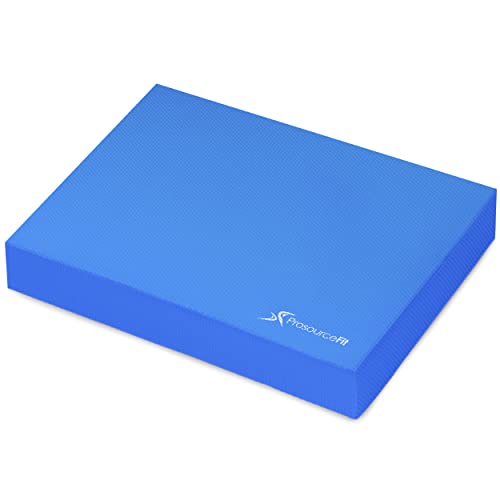
- Soft, unstable surface supports balance training
- Slip-resistant TPE is sweat-proof and easy to clean
- Lightweight pad also works for yoga and rehabilitation
Best For: Beginners, recovery exercises, and versatile home use
Best Directional Challenge
StrongTek 360-Degree Wooden Board

- 360-degree wobble trains multidirectional stability
- Cross base provides a more controlled challenge
- Supports up to 350 pounds with a non-slip top
Best For: Intermediate and advanced balance practice
Best Interactive Pick
GoBalance App-Enabled Balance Board

- 12 free games and four sports training modes
- Bluetooth app tracks feedback and progress
- Wide 450-pound-capacity wooden platform
Best For: Families and adults wanting guided, interactive home workouts
Best Simple Wood Option
Wooden 350-LB Anti-Slip Balance Trainer

- Supports balance, core, posture, and stability work
- Anti-slip surface and floor-protective base pads
- Portable, compact, and requires no assembly
Best For: Beginners, seniors, offices, and limited-space workouts
Best Lightweight Twist Board
Blue ABS Fitness Balance Board

- Swiveling design adds core-focused movement
- Supports yoga, planks, push-ups, and balance drills
- Lightweight ABS build with a 400-pound rating
Best For: Families, dancers, and users wanting rotational workouts
Solid Core Starter

- 350-pound weight capacity
- Anti-slip surface with floor protection pads
- Useful for balance, core work, and physical therapy
Best For: Beginners and compact home or office workouts
Adjustable Training Pick

- Three adjustable height levels
- 360-degree rotation with roller setup
- 441-pound capacity and included storage rack
Best For: Progressive balance training and surf-style workouts
Family-Friendly Rocker

- Designed for adults, kids, and seniors
- Flippable rocker and wobble-style design
- Fully assembled for home or office use
Best For: Family workouts and standing-desk movement
Best Classic Wobble Board – Amazon Basics Wood Balance Trainer
For straightforward balance boards for home workouts, this Amazon Basics model offers a solid wood platform, a slip-resistant surface, and a simple wobble design. It supports exercises such as planks, push-ups, standing balance poses, and targeted strengthening work.
Best For: Adults and athletes who want a traditional balance trainer for core, coordination, posture, and balance exercises.
Pros:
- Solid wood top supports up to 265 pounds.
- Non-slip surface helps provide a secure grip.
- Works for several exercises, including planks, push-ups, and standing poses.
- Compact 15.75-by-15.75-inch footprint suits home workout spaces.
Cons:
- It should be used only on dry, non-slip surfaces.
- The basic wobble-board design does not include monitoring or resistance bands.
This is a practical pick if you prefer a durable, uncomplicated balance board for home workouts rather than a cardio-focused machine. Its 265-pound capacity and compact size make it versatile, though users should follow the surface-safety warning.
Best Low-Impact Cardio Board – MERACH Ski Balance Trainer
Among balance boards for home workouts, the MERACH model stands out for its side-to-side ski-style motion, included resistance bands, and LCD feedback. It is designed to combine balance practice with a low-impact cardio session while remaining compact enough for home use.
Best For: Home users seeking a joint-friendly, full-body workout with step tracking and resistance-band options.
Pros:
- Ski-inspired motion targets the legs and glutes while training balance.
- Includes two resistance bands for added workout variety.
- LCD screen tracks steps, time, and calories.
- 300-pound capacity and quiet operation under 25dB suit indoor use.
Cons:
- The side-to-side motion may require caution for beginners or people with balance issues.
- It is larger and heavier than a simple wobble board.
- Two LR41 batteries are required for the display.
The MERACH is a better fit for shoppers who want movement and feedback rather than a static balance challenge. Its ready-to-use design and storage-friendly profile add convenience, but new users should start carefully with the ski-style motion.
Best Balance Pad – ProsourceFit Cushioned Foam Mat
The ProsourceFit pad is a soft, lightweight alternative to rigid balance boards for home workouts. Its unstable TPE foam surface can challenge balance and core control while also serving as a knee pad, seat cushion, yoga aid, or standing-desk foot pad.
Best For: Beginners, older adults, rehabilitation exercises, and shoppers who want a versatile cushioned balance surface.
Pros:
- Unstable foam surface helps train balance, core strength, feet, and ankles.
- Sweat-proof, slip-resistant TPE is easy to clean.
- Lightweight 12-ounce design is easy to carry.
- Can be used for lunges, squats, planks, yoga, meditation, and more.
Cons:
- It provides a cushioned pad experience rather than the rocking motion of a rigid board.
- Its compact surface may feel limiting for some standing movements.
Choose this pad if comfort, portability, and multi-use functionality matter more than a pronounced wobble. It offers an approachable way to add instability to workouts and physical-therapy routines.
Best Directional Challenge – StrongTek 360-Degree Wooden Board
For shoppers comparing balance boards for home workouts, the StrongTek Advanced board provides a step up from a basic rocker. Its cross base allows 360-degree directional wobble, while the wider floor contact area offers more control than a traditional round-base board.
Best For: Users ready for a more dynamic balance challenge focused on stability, ankle control, coordination, and core engagement.
Pros:
- 360-degree wobble creates a multidirectional balance challenge.
- Cross base offers more floor contact and control than a round-base design.
- Textured top helps keep feet secure during weight shifts.
- Supports up to 350 pounds and suits home workouts, standing desks, and balance practice.
Cons:
- Its advanced movement may be demanding for beginners.
- It is heavier than some compact balance trainers at about 2.23 kilograms.
- The cross-base design still requires adequate floor space for safe movement.
This board occupies a useful middle ground: more challenging than a basic rocker but more controlled than a traditional round-base wobble board. It is a strong option for experienced users who want multidirectional training without jumping straight to the most difficult design.
Best Interactive Pick – GoBalance App-Enabled Balance Board
The GoBalance Sport-Play is a feature-rich option for balance boards for home workouts, combining balance training with app-connected games and exercise modes. Its wide wooden platform, removable soft mat, and Bluetooth feedback make it especially suited to users who want guided, engaging sessions rather than basic balancing drills.
Best For: Families, teens, and adults who want interactive balance, coordination, core, and full-body training at home.
Pros:
- Includes 12 free games, four sports training modes, and real-time progress analysis through the app.
- Supports multiplayer use with up to four boards for family challenges and side-by-side workouts.
- Wide wooden surface, anti-slip finish, removable TPE mat, and professional balance cushion support varied exercises.
- Rated for up to 450 pounds.
Cons:
- The board cannot connect directly to a TV; casting or screen mirroring must be done through a compatible mobile device.
- Its app and Bluetooth features may be more than needed for shoppers seeking a simple balance trainer.
Choose this model when motivation, feedback, and family participation matter as much as the physical workout. It is a more involved home-gym option than a basic rocker board, but its interactive features add variety.
Best Simple Wood Option – Wooden 350-LB Anti-Slip Balance Trainer
This wooden balance trainer is a straightforward choice among balance boards for home workouts. It is ready to use without assembly and supports balance, core, posture, and stability exercises, while its compact design also works in an office, at a standing desk, or during travel.
Best For: Beginners, seniors, and users seeking a portable board for gentle balance practice and basic bodyweight exercises.
Pros:
- Supports planks, squats, push-ups, ankle and knee movement, and daily conditioning.
- Anti-slip surface and non-slip base pads help provide stability while protecting floors.
- Compact, portable, and ready to use out of the box with no assembly required.
- Supports users up to 350 pounds.
Cons:
- It does not include app connectivity, games, or progress-tracking features.
- The 350-pound weight recommendation is lower than some alternatives in this roundup.
This is a practical pick for shoppers who value simplicity and easy storage. Its broad use case—from home workouts to standing-desk sessions—makes it a flexible, low-fuss balance-training tool.
Best Lightweight Twist Board – Blue ABS Fitness Balance Board
This lightweight ABS twist board offers a versatile approach to balance boards for home workouts, combining balance drills with swiveling, core-focused movement. Its non-slip surface supports exercises such as planks, push-ups, yoga, and muscle-toning routines, making it useful for users who want more than a basic rocker motion.
Best For: Families, dancers, and fitness users interested in twisting exercises, core engagement, and portable stability training.
Pros:
- Swiveling design encourages core-engaging movements for balance, posture, and leg training.
- Supports planks, push-ups, yoga, balancing drills, and muscle-toning exercises.
- Lightweight ABS construction is easy to move and use for different workouts.
- Rated for up to 400 pounds and designed for children and adults.
Cons:
- The twisting format may be less suitable for users seeking only gentle, stationary balance practice.
- It lacks app guidance and the cushioning or mat features found on more fully equipped models.
- The supplied dimensions and size descriptions are inconsistent, so confirm fit before purchasing.
Consider this board if you want a lightweight platform that adds rotational movement to home exercise. Its versatility is appealing, though shoppers wanting a more traditional wooden trainer may prefer a rocker-style design.
Solid Core Starter – Compact Wooden Wobble Board
If you want balance boards for home workouts that can also support rehabilitation or standing practice, this compact wooden wobble board is a practical option. Its anti-slip surface, protective floor pads, and 350-pound capacity make it suitable for controlled balance and core-strength exercises.
Best For: Beginners, adults working on stability, physical therapy routines, and compact home or office workouts.
Pros:
- Supports up to 350 pounds.
- Useful for balance training, squats, planks, push-ups, and physical therapy.
- Anti-slip surface and protection pads help improve workout safety and protect floors.
- Compact, portable wooden design is easy to store or transport.
Cons:
- Offers a simpler wobble-board format rather than adjustable height or roller-based training.
- The listed dimensions may provide less standing room than larger balance trainers.
This board is a straightforward choice for shoppers who prioritize portability, basic stability work, and a high stated weight capacity over advanced configuration options.
Adjustable Training Pick – 2-in-1 Roller Balance Board
For balance boards for home workouts with more progression options, this VEVOR 2-in-1 trainer combines a board and roller setup with adjustable height levels. Its 360-degree rotation and included magnetic stoppers allow users to vary the challenge while practicing core control and coordination.
Best For: Adults seeking adjustable balance training, surf-style practice, full-body coordination work, or a higher-capacity trainer.
Pros:
- Three height settings support beginner through advanced training.
- 360-degree rotation adds variety to balance and core workouts.
- Supports up to 441 pounds and uses multi-layer engineered wood.
- Includes a roller, magnetic stoppers, and storage rack.
Cons:
- Larger 28-inch format may require more storage space than compact rocker boards.
- The roller-based design may feel more demanding for users new to balance training.
This is the most configurable option in the group, making it a strong fit for users who want to increase difficulty over time and explore surf- or paddle-board-inspired movement.
Family-Friendly Rocker – 2-in-1 Wooden Balance Board
This 2-in-1 wooden rocker is a flexible choice for balance boards for home workouts, especially when several people will use the same piece of equipment. Flip the fully assembled board to change its rocking action, then use it for core work, squats, planks, push-ups, or active standing at a desk.
Best For: Families, beginners, standing-desk users, and home gyms that need a portable rocker-style trainer.
Pros:
- Supports balance and coordination practice for adults, kids, and seniors.
- 2-in-1 design provides side-to-side rocking and wobble-style movement.
- Fully assembled and compact for use around the home, office, or living room.
- Suitable for core, leg, upper-body, and active-standing exercises.
Cons:
- Its 150-kilogram capacity is lower than the 441-pound option in this roundup.
- It does not include adjustable height settings or a roller.
This board emphasizes convenience and shared use. Its fully assembled format and familiar rocker motion make it approachable for casual home exercise and desk-based movement breaks.
How We Picked the Best Balance Boards for Home Workouts
We focused on the features that matter most during regular home use: stability, surface grip, construction, movement range, portability, and likely learning curve. The selection includes rocker boards, 360-degree wobble models, roller-based trainers, cushioned balance pads, and app-enabled equipment.
We also considered stated weight limits and useful extras such as resistance bands, magnetic stoppers, interactive games, and dual-purpose designs. Because balance equipment can feel very different from one model to another, the best choice is not necessarily the most advanced or expensive option—it is the board you can use safely and consistently.
Quick Comparison
| Board type | Best for | What to consider |
|---|---|---|
| Rocker board | Beginners and controlled side-to-side practice | Usually easier to learn, but offers a more limited movement pattern |
| 360-degree wobble board | Progressive balance and core training | More demanding; requires greater ankle and hip control |
| Roller board | Advanced balance challenges | Needs extra clearance and a cautious learning process |
| Balance pad | Low-impact stability, mobility, and rehabilitation exercises | Less dynamic than a rigid board, but often more comfortable and versatile |
| App-connected board | Gamified training and motivation | May depend on a phone, sensors, or an active app experience |
Key Buying Factors for Balance Boards for Home Workouts
Movement and Difficulty
Choose a rocker board if you are new to balance training or want predictable front-to-back or side-to-side movement. A 360-degree board adds instability and may suit experienced users. Roller designs are typically the most challenging and should be used with plenty of open space and a nearby support.
Grip and Construction
Look for a textured, slip-resistant standing surface and a base that will not slide easily on your floor. Wood can provide a firm, responsive feel, while foam pads are quieter and gentler on knees and joints. Check whether the board is appropriate for your flooring and whether floor protection is recommended.
Size, Capacity, and Storage
Confirm the published weight limit, platform dimensions, and clearance needed for movement. A compact board is easier to store, but a wider surface may feel more reassuring for beginners. If you plan to use it at a standing desk or carry it between rooms, prioritize manageable weight and simple storage.
Features and Training Goals
Resistance bands can add upper-body work, while app-based games may make practice more engaging. These extras are useful only if they match your habits. For basic core and stability work, a durable board with reliable traction may be a better value than connected features.
Who Should Buy Which Balance Boards for Home Workouts?
Beginners: Start with a rocker board or cushioned balance pad for a more controlled introduction. Intermediate users: Consider a 360-degree wobble board or a model with adjustable challenge. Advanced users: A roller board can provide a demanding progression, provided you have adequate space and stable support nearby. Rehabilitation or low-impact training: A balance pad may offer the most comfortable option, but follow guidance from a qualified professional when recovering from an injury. Motivation-focused users: An app-enabled board or one with resistance bands can add variety and help maintain a regular home workout routine.