
Hard training can leave your legs feeling heavy, tight, and slow to recover. The best leg massagers for athletes use sequential air compression, heat, or both to support post-workout comfort and circulation.
We compared 10 recovery-focused models across fit, coverage, controls, portability, and value to help you choose a system that matches your training routine and recovery goals.
Best 10 Leg Massagers for Athletes Picks for 2026
Best Overall Recovery Boots
QUINEAR Professional Air Compression System

- Four-chamber foot, calf, and thigh coverage
- Eight intensities, three modes, and three timers
- Portable design with carry bag and 24-month support
Best For: Athletes seeking adjustable full-leg compression
Best With Heat
FIT KING Full-Leg Compression Massager

- Combines compression with a heating function
- Covers feet, calves, and thighs
- Pressure sensors, zippers, and LCD controller
Best For: Users wanting heated full-leg recovery sessions
Best Adjustable Recovery System
QUINEAR Athlete Leg Recovery Boots
- Sequential four-chamber full-leg compression
- Eight pressure levels and three massage modes
- Three adjustable session timers; no heat
Best For: Athletes wanting customizable post-workout compression
Full-Leg Recovery Pick
RENUPRO Dynamic Air Compression Boots
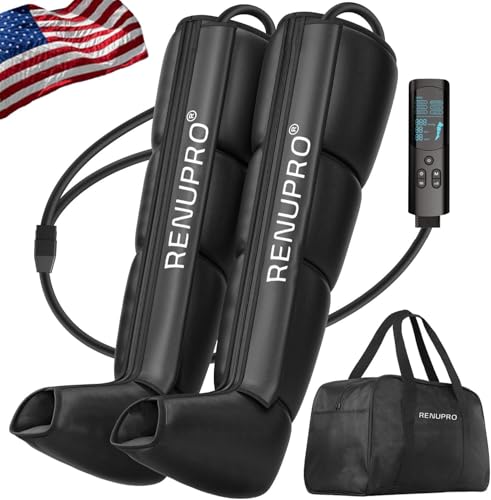
- Covers feet, calves, knees, and thighs
- Six modes and nine strength levels
- 24-month warranty and pressure sensors
Best For: Full-leg recovery at home
Best Cordless Option
FIT KING FT-115A Recovery Boots
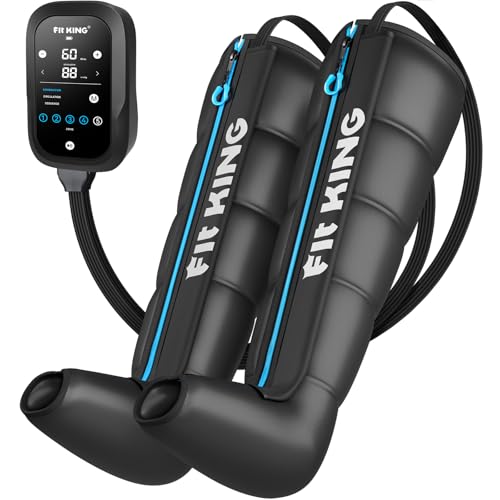
- Rechargeable battery lasts 3–4 hours
- Five-zone, single- or full-leg control
- Includes carry bag and two-year warranty
Best For: Portable, targeted recovery sessions
Best for Comfort
RIKE Full-Leg Compression Massager

- Five-chamber full-leg compression
- Three adjustable heat levels
- Six modes and 60–160 mmHg intensity
Best For: Warmth-enhanced home recovery
Best Overall
FIT KING Full-Leg Recovery Boots

- Four air channels cover the full leg
- Eight pressure intensities and three modes
- Two-year worry-free support
Best For: Athletes seeking adjustable full-leg compression
Best for Fine-Tuned Control
MUSUGY Sequential Compression Boots

- Five adaptive air chambers
- Nine pressure levels and six modes
- Focused foot, calf, and thigh programs
Best For: Athletes wanting precise, configurable compression
Best Overall Recovery Boots – QUINEAR Professional Air Compression System
For athletes comparing leg massagers for athletes, the QUINEAR QN-071A is a full-leg compression system designed for post-workout recovery. Its four air chambers cover the foot, calf, and thigh, while adjustable pressure, modes, and session times let you tailor treatment to your routine.
Best For: Athletes, runners, cyclists, and active users who want adjustable full-leg compression in a portable boot system.
Pros:
- Four sequential air chambers cover the foot, calf, and thigh.
- Offers eight intensities from 50–120 mmHg and three compression modes.
- Includes 20-, 25-, and 30-minute timer settings.
- Comes with a carry bag and 24-month worry-free support.
Cons:
- Corded operation limits use away from an outlet.
- Small size may require careful fit checking before purchase.
- It does not provide heat.
This is a versatile pick for athletes who prioritize granular compression control and full-leg coverage over heat or cordless convenience.
Best With Heat – FIT KING Full-Leg Compression Massager
The FIT KING FT-076A combines full-leg sequential compression with heat, making it a practical option among leg massagers for athletes who want added warmth during recovery. Its zipped boots, pressure sensor, LCD controller, and broad foot-to-thigh coverage simplify setup and adjustment.
Best For: Users who want full foot-and-leg compression with heat and easy-to-read controls.
Pros:
- Four-plus-four airbags provide full foot and leg coverage.
- Includes three massage modes and three intensity levels.
- Built-in pressure sensors help adjust the fit for different users.
- Zippers and an LCD controller make operation and setup easier.
Cons:
- Its corded design requires access to power.
- It is not water resistant.
- The feature-rich boot design is heavier than simpler wraps.
Choose this model if heat is important and you value a guided, full-coverage boot experience with straightforward digital controls.
Best Adjustable Recovery System – QUINEAR Athlete Leg Recovery Boots
The QUINEAR Leg Recovery Compression System is built for athletes who want structured post-workout compression without heat. Four chambers inflate and deflate from the foot toward the thigh, and the controller provides eight pressure levels, three modes, and adjustable session timers.
Best For: Athletes and active users looking for precise, sequential full-leg compression after training.
Pros:
- Sequentially covers the foot, lower calf, upper calf, and thigh.
- Provides eight intensities between 50–120 mmHg.
- Offers sequence, circulation, and combination modes.
- Includes 20-, 25-, and 30-minute treatment timers.
Cons:
- There are no heat settings.
- It requires corded electric power.
- Users should confirm the medium boot fit before ordering.
This model is a strong match for training-focused recovery routines where compression customization matters more than heat or wireless operation.
Best Budget-Friendly Calf Option – FIT KING Foot and Calf Massager
For shoppers seeking accessible leg massagers for athletes, the FIT KING FT-009A focuses on the feet and calves rather than the thighs. Adjustable wraps, two modes, three intensities, and included size extensions make it a flexible choice for everyday circulation-focused use.
Best For: Users who need portable foot-and-calf compression and do not require thigh coverage or heat.
Pros:
- Adjustable wraps cover the feet and calves.
- Includes two size extensions for calves up to 28.5 inches.
- Offers two modes and three massage intensity levels.
- Comes with a storage bag and a two-year warranty.
Cons:
- It does not massage the thighs.
- It has no heat function.
- It uses corded power.
This is the practical choice for athletes and active users who want simpler lower-leg recovery without paying for full-leg or heated features.
Full-Leg Recovery Pick – RENUPRO Dynamic Air Compression Boots
For athletes comparing leg massagers for athletes, the RENUPRO Dynamic Air Compression Boots provide full-leg sequential compression in one session. The boots cover the feet, calves, knees, and thighs, with adjustable settings suited to post-workout recovery or relief after long periods on your feet.
Best For: Athletes and active users who want full-leg compression with broad pressure and timer customization.
Pros:
- Full-leg coverage from feet through thighs.
- Six modes, nine strength levels, and 15-, 20-, or 25-minute timers.
- Overlapping air chambers and pressure sensors support sequential compression.
- Includes a 24-month warranty from a USA-owned brand.
Cons:
- The corded design is less convenient for travel or use away from an outlet.
- The standard fit supports a 29–34-inch inseam and a maximum 30-inch thigh circumference.
- It is not water resistant.
This is a practical choice when complete leg coverage and fine-grained intensity control matter more than portability. Check the stated sizing before ordering, especially if you have larger thighs or a shorter or longer inseam.
Best Cordless Option – FIT KING FT-115A Recovery Boots
The FIT KING FT-115A stands out among leg massagers for athletes who need recovery flexibility beyond the wall outlet. Its rechargeable battery, carry bag, and five-zone control let you use compression at home, in the gym, at the office, or while traveling.
Best For: Runners, cyclists, fitness enthusiasts, and travelers who want portable, zone-specific leg compression.
Pros:
- Cordless operation provides three to four hours of continuous use per charge.
- Five-zone control can target the foot, calves, thighs, or the full leg.
- Offers 11 pressure levels, three massage modes, and 10 time settings.
- Includes a carry bag and a two-year warranty.
Cons:
- At 4.5 kg, it is relatively heavy compared with a simpler leg massager.
- The battery requires about two hours to charge.
- Its extensive controls may be more than casual users need.
The FT-115A is the strongest fit for athletes who prioritize portability and targeted treatment. Its adjustable zones are useful when only the feet, calves, or thighs need attention rather than the entire leg.
Best for Comfort – RIKE Full-Leg Compression Massager
For athletes seeking leg massagers for athletes with added warmth, the RIKE Full-Leg Compression Massager combines five-chamber sequential compression with three heat levels. It is designed for full-leg sessions and offers adjustable pressure for post-workout soreness, cramps, stiffness, and circulation-focused use.
Best For: Athletes and active adults who want compression paired with adjustable heat.
Pros:
- Five independent chambers provide sequential foot-to-thigh compression.
- Six modes and six intensity levels span 60–160 mmHg.
- Three heat levels add warming therapy to compression sessions.
- Memory function, pause control, and 15-, 20-, or 30-minute timers simplify repeated use.
Cons:
- The corded design limits use away from a power outlet.
- Heat may be unnecessary for users who prefer compression only.
- The product is listed as home-grade rather than professional-grade.
The RIKE is a compelling home option when heat is a priority alongside full-leg compression. Its wide pressure range and saved settings make it adaptable, while the wired controller avoids the need to bend down during adjustments.
Best Overall – FIT KING Full-Leg Recovery Boots
For athletes comparing leg massagers for athletes, the FIT KING FT-082A is a full-leg compression system designed for pre-workout warm-ups and post-workout recovery. Its four air channels cover the feet, calves, knees, and thighs, while sensor-based controls help adjust pressure to the user’s leg size.
Best For: Athletes and fitness enthusiasts who want full-leg compression with straightforward, adjustable controls.
Pros:
- Full-leg coverage with four independent air chambers.
- Three modes, eight pressure intensities, and three timer options.
- Sensor control helps tailor inflation volume and pressure.
- Includes a two-year worry-free support commitment.
Cons:
- Corded operation limits portability.
- Medium sizing may not suit every leg shape.
- It is not water resistant.
The FIT KING is a practical all-around choice when you want broad coverage and plenty of intensity settings. Its digital controller and faster-inflating pump make it especially suitable for regular home recovery sessions.
Best Heavy-Duty Pick – Heated Full-Leg Compression Boots
Among leg massagers for athletes, this model stands out by combining sequential compression with adjustable heat. Its split design focuses pressure on the feet, calves, and thighs while providing knee warmth without applying compression to the knee area.
Best For: Users who want customizable compression, knee-friendly warmth, and multiple settings for workout recovery or everyday leg fatigue.
Pros:
- Three temperature levels from 42–50°C.
- Six massage modes and six pressure levels ranging from 90–220 mmHg.
- Four independent air chambers provide full-leg sequential compression.
- Memory settings and a 20-minute automatic shutoff support convenient use.
Cons:
- Corded electric operation is less convenient for travel.
- The higher pressure range may require careful adjustment for comfort.
- Heat and compression settings are not described as independently available for every area.
This is a versatile pick for people who value heat as much as compression. The knee-specific heating approach and automatic safety features make it a thoughtful option for routine recovery, relaxation, and circulation-focused use.
Best for Fine-Tuned Control – MUSUGY Sequential Compression Boots
For athletes seeking leg massagers for athletes with highly adjustable compression, the MUSUGY system offers five air chambers that inflate sequentially from the foot toward the thigh. Its pressure sensor adapts air output to leg circumference and back-pressure for more consistent coverage.
Best For: Runners, cyclists, gym users, and athletes who want detailed intensity, program, and zone-control options.
Pros:
- Five-chamber distal-to-proximal sequential compression.
- Nine pressure levels from 40–120 mmHg.
- Six modes include full-leg and focused foot, calf, and thigh programs.
- Three session timers and memory function simplify repeat use.
Cons:
- Fit requirements include a 36-inch-or-longer inseam and specified circumference limits.
- The 12-month warranty is shorter than the two-year support listed for some alternatives.
- It is designed for home, gym, or office use but requires an electrical power source.
The MUSUGY is a strong choice when control matters most. Its five-zone design, broad pressure range, and focused massage programs let users tailor sessions more precisely than a basic full-leg compressor.
How We Picked the Best Leg Massagers for Athletes
We focused on the features that matter most after training: dependable compression, useful coverage, straightforward controls, and a fit that can accommodate different leg sizes. The lineup includes full-leg and partial-leg systems, heated and non-heated models, and both traditional plug-in and cordless designs.
We also considered adjustment options such as intensity levels, massage modes, treatment timers, and independently controlled chambers. These details affect whether a device feels like a practical recovery tool or becomes difficult to use consistently. Product claims about circulation, pain, edema, or recovery should not replace medical advice; athletes with injuries, vascular conditions, or unexplained swelling should consult a healthcare professional first.
Quick Comparison
| Feature | What to look for | Best suited to |
|---|---|---|
| Compression style | Sequential chambers that inflate from the foot upward | Post-workout recovery and tired legs |
| Coverage | Foot, calf, knee, and thigh coverage | Athletes wanting a full-leg session |
| Heat | Optional warming function with adjustable settings | Users who prefer warmth and relaxation |
| Portability | Rechargeable battery or compact controls | Travel, events, and gym-bag use |
| Adjustability | Multiple pressure levels, modes, and timers | Households or athletes with changing needs |
Key Buying Factors for Leg Massagers for Athletes
Compression and Pressure Control
Sequential compression is generally more useful than a single all-at-once squeeze because it creates a wave-like massage from the lower leg upward. Look for several intensity levels and a pressure setting you can tolerate comfortably. More pressure is not automatically better, especially after intense exercise.
Fit and Leg Coverage
Check the stated size range before buying. A loose boot may provide uneven pressure, while an overly tight fit can be uncomfortable. Full-leg boots cover more muscle groups, but calf-focused designs are often easier to put on and more convenient for quick sessions.
Heat, Controls, and Session Length
Heat can make a recovery session feel more relaxing, but it is not essential for every athlete. Prioritize clear controls, automatic shutoff, and a timer you can set without repeatedly checking the device. If you train frequently, simple operation often matters more than extra modes.
Power and Portability
Plug-in systems are suitable for home use and may offer longer sessions. Cordless models are easier to take to competitions, offices, or hotels. Consider charging time, battery runtime, storage size, and whether the pump and boots can be packed together.
Who Should Buy Which Leg Massagers for Athletes?
Choose a full-leg compression system if you want coverage from the foot through the thigh after running, cycling, strength training, or long periods on your feet. A heated model is a good match for users who value warmth and relaxation alongside compression. If you travel often, prioritize a cordless or compact design over features you will rarely use.
For shared households, choose a model with broad sizing flexibility, multiple pressure levels, and easy-clean materials. Athletes recovering from a diagnosed injury or managing swelling should select a device only after receiving guidance from a qualified clinician. Whichever model you choose, begin with a low setting, follow the manufacturer’s instructions, and stop if you experience pain, numbness, skin changes, or unusual discomfort.