
Push-up handles can make circuit workouts more comfortable by reducing wrist extension and giving your hands a more consistent position between sets. The right pair should also stay planted during fast transitions, presses, and bodyweight movements.
We compared 10 options across grip comfort, stability, portability, construction, and training versatility to help you find push-up handles that match your space, workout style, and experience level.
Best 10 Push Up Handles for Circuit Training Picks for 2026
Rotating Stability Pick

- Smooth steel-ball-bearing rotation
- Eight-inch non-slip bases
- Supports up to 400 pounds
Best For: Rotating push-up work and stable circuit training
Versatile Parallette Choice

- Supports push-ups, dips, and handstands
- Industrial-grade steel construction
- Non-skid feet with foam tops
Best For: Multi-movement calisthenics circuits
Compact Budget Option

- Lightweight 1.2-pound design
- Rubber feet help prevent slipping
- Supports up to 300 pounds
Best For: Portable, straightforward home circuit workouts
Heavy-Duty Steel Pick

- Supports up to 500 pounds
- Stable triangular stainless steel frame
- Fully assembled with rubber pads
Best For: High-load strength circuits and outdoor training
Lightweight Stability Pick

- 8.5 mm foam padding for hand comfort
- Non-slip silicone base and 400-lb capacity
- Lightweight design for easy storage and carrying
Best For: Portable home circuit training
Wide-Base Budget Option

- Soft plastic ergonomic grip
- Large rubber anti-slip bottom pads
- Pre-assembled for deeper floor push-ups
Best For: Stable beginner-friendly home workouts
Most Versatile Parallettes
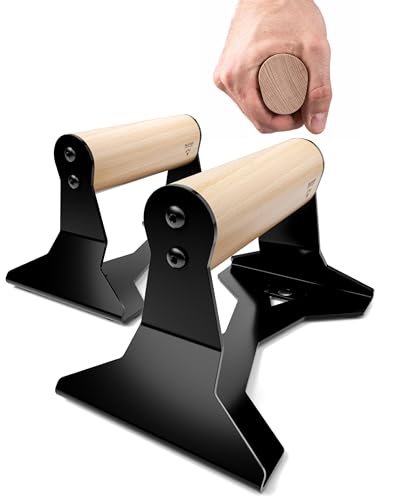
- Ergonomic beech wood handles
- Steel feet with anti-slip pads
- Supports push-ups, dips, and handstands
Best For: Advanced calisthenics circuits
Lightweight Comfort Pick

- Lightweight and easy to transport
- Cushioned grips help ease wrist strain
- Non-skid bases support stable reps
Best For: Portable home, gym, office, and travel circuits
Heavy-Duty Circuit Choice

- Stated 330-pound maximum weight recommendation
- Foam padding helps absorb sweat
- Designed for neutral wrists and deeper reps
Best For: Strength and cardio circuits requiring a higher stated capacity
Stable Ergonomic Option
Portable Deep-Range Push Up Bars

- Ergonomic design supports wrist comfort
- Rubber feet grip multiple floor types
- Compact pair supports deeper push-up reps
Best For: Portable circuits focused on stability and range of motion
Rotating Stability Pick – Perfect Pushup Elite
For circuit training, the Perfect Pushup Elite combines smooth rotating handles with a broad, textured base. Its design can help vary hand movement while keeping the bars planted during repeated floor exercises.
Best For: Athletes who want rotating push up handles for circuit training with added base stability and wrist-comfort features.
Pros:
- Steel ball bearings provide smooth handle rotation.
- Eight-inch bases and textured bottom treads help resist slipping.
- Ergonomic TPE grips help distribute pressure across the hands.
- Supports up to 400 pounds, including athletes using weight vests.
Cons:
- Rotating handles may be less suitable for users who prefer a fixed feel.
- The broad base and 1.8-pound pair may take more storage space than compact bars.
This is a strong circuit-training option when smooth rotation and a stable stance matter more than minimal size. No assembly is required.
Versatile Parallette Choice – Rubberbanditz Parallette Bars
These Rubberbanditz parallettes are a versatile choice for circuit training that goes beyond standard push-ups. The fixed steel bars can also support dips, L-sits, planches, and handstand work.
Best For: Users building varied calisthenics circuits with push up handles, dip bars, and handstand equipment in one setup.
Pros:
- Industrial-grade steel construction supports up to 330 pounds.
- Non-skid feet and solid welding are designed for stability.
- Foam tops provide a more comfortable gripping surface.
- Compact design is suitable for home or travel workouts.
Cons:
- At four pounds, the pair is heavier than lightweight push-up stands.
- Fixed handles do not provide rotating movement.
- Its taller, wider design may be more equipment than basic push-ups require.
Choose these bars if your circuit includes multiple bodyweight movements. They offer broader exercise utility than conventional push-up-only handles, though their larger format is less streamlined.
Compact Budget Option – Portable Push Up Bars
These portable push up bars are a practical entry-level choice for circuit training at home, in a gym, or outdoors. Their ergonomic fixed handles raise the hands to increase range of motion while rubber feet help keep the stands in place.
Best For: Beginners and casual trainers seeking lightweight, portable push up handles for circuit training.
Pros:
- Lightweight design weighs about 1.2 pounds.
- Rubber feet are intended to prevent slipping across floor types.
- Ergonomic shape is designed to reduce wrist strain.
- Rated to support up to 300 pounds.
Cons:
- Assembly is required before use.
- Polypropylene construction may feel less substantial than steel alternatives.
- Fixed handles provide no rotation or adjustable positioning.
This pair makes sense when easy transport and simple storage are priorities. It delivers the core benefits of raised push-ups without the added versatility of parallettes or rotating bars.
Heavy-Duty Steel Pick – Triangular Push Up Stand
For demanding circuit training, these stainless steel push up handles use a triangular base and four rubber anti-slip pads per handle. The fully assembled pair is built for high load capacity while remaining easy to carry to outdoor workouts.
Best For: Strength-focused users who want heavy-duty, fixed push up handles for circuit training.
Pros:
- Stainless steel construction supports up to 500 pounds.
- Triangular design is intended to improve stability.
- Four rubber pads per handle help reduce movement and protect floors.
- Aluminum grips do not retain odor caused by hand sweat like foam grips.
Cons:
- Fixed handles do not offer rotating movement.
- Metal grips may feel less cushioned than foam or TPE alternatives.
- The compact dimensions may provide less base coverage than wider push-up stands.
This is the strongest-rated option in the group and a good fit for high-load training. Its stability-focused triangular frame and no-assembly design keep it practical for repeated circuits.
Lightweight Stability Pick – Fitarc Push Up Bars
For push up handles for circuit training, the Fitarc bars combine a lightweight design with a widened silicone base for steadier floor work. Thick foam padding also helps reduce hand pressure during repeated sets.
Best For: Home circuits where portability, cushioned grips, and stable push-up positioning matter.
Pros:
- 8.5 mm foam padding helps improve hand comfort.
- Widened silicone bases help prevent slipping or shifting.
- Triangular construction supports up to 400 pounds.
- Compact, 0.36 kg design is easy to store and carry.
Cons:
- Plastic construction may appeal less to shoppers seeking metal or wooden equipment.
- Notes specifically recommend tile and wooden floors, so other surfaces may vary.
The Fitarc is a practical circuit-training option when you want deeper push-ups without adding much equipment weight. Its foam grip and silicone base make it especially convenient for home workouts.
Wide-Base Budget Option – Kipika Push Up Bars
If you need push up handles for circuit training with a broad floor contact area, the Kipika stands use large rubber pads to help keep each handle in place. Their elevated grip can also reduce wrist and elbow strain during deeper push-ups.
Best For: Beginners and home exercisers who prioritize a comfortable plastic grip and broad anti-slip support.
Pros:
- Soft plastic handles are designed to reduce hand discomfort and calluses.
- Large rubber bottom pads help provide stability across various floor types.
- Elevated handles enable deeper push-ups targeting the chest, shoulders, arms, back, and core.
- Pre-assembled design is ready to use out of the box.
Cons:
- Fixed plastic construction offers less material variety than wood-and-steel alternatives.
- The supplied notes do not describe the bars as adjustable or suitable for exercises beyond floor strength training.
Kipika’s main advantage is straightforward stability: the wide rubber pads are useful when circuits involve frequent repetitions and transitions. It is a simple choice for floor-based upper-body training.
Most Versatile Parallettes – PULLUP & DIP Push Up Handles
For push up handles for circuit training that can support more than standard push-ups, these parallettes pair ergonomic beech wood handles with heavy-duty steel feet. The elevated setup increases movement amplitude and accommodates several calisthenics exercises.
Best For: Calisthenics-focused circuits involving push-ups, dips, one-arm variations, and handstand work.
Pros:
- Ergonomic beech wood handles are designed to reduce unnatural wrist bending.
- Heavy-duty steel feet and anti-slip pads provide a stable stand.
- Supports push-ups, one-arm push-ups, seated dips, and handstand exercises.
- Pre-assembled and compact enough to transport in a backpack.
Cons:
- At 4.2 pounds, it is heavier than the lightweight Fitarc option.
- The 200 kg maximum load is lower than the Kipika’s stated 1,000-pound recommendation.
- Its broader exercise focus may be more equipment than needed for basic push-ups.
These parallettes stand out for circuit routines that alternate between pressing and calisthenics movements. Wood handles, steel feet, and included exercise guidance make them a strong choice for users seeking versatility and a more substantial build.
Lightweight Comfort Pick – Cushioned Foam Push Up Bars
For shoppers comparing push up handles for circuit training, the READAEER pair is a lightweight option with cushioned foam grips and non-skid bases. Its elevated design can help train the chest, shoulders, triceps, and back while reducing wrist strain during push-ups.
Best For: Home, gym, office, or travel workouts where portability and padded grip comfort matter.
Pros:
- Lightweight, portable design that can be assembled and disassembled for storage.
- Cushioned foam grips help reduce pressure on the wrists.
- Non-skid bases are designed to help keep the bars stable during reps.
- Supports upper-body exercises targeting the chest, shoulders, triceps, and back.
Cons:
- Basic assembly is required, and detailed instructions are not provided.
- Plastic construction may be less substantial than heavier-duty alternatives.
The READAEER bars make sense for beginners and frequent travelers who want a simple, comfortable way to add elevation to bodyweight circuits without carrying bulky equipment.
Heavy-Duty Circuit Choice – 330-Lb Push Up Handles
Among push up handles for circuit training, the 5BILLION bars stand out for their stated 330-pound maximum weight recommendation and sweat-absorbing foam padding. The elevated, fixed-handle design supports standard push-ups and dynamic cardio-strength circuits while encouraging a neutral wrist position.
Best For: Users seeking a sturdier-feeling, versatile pair for home-gym strength work and cardio-strength circuits.
Pros:
- Rated for up to 330 pounds according to the supplied product details.
- High-density foam handles absorb sweat and support a secure grip.
- Neutral-wrist design may reduce strain and allow a deeper range of motion.
- Compact bars assemble and disassemble for use at home, in the gym, or outdoors.
Cons:
- Fixed handles limit adjustment options.
- Assembly is required before use, even though setup is designed to be quick.
With its higher stated weight capacity and included workout guide, this pair is a practical choice for users who want push-up handles that can fit into both strength-focused and faster-paced circuits.
Stable Ergonomic Option – Portable Deep-Range Push Up Bars
These ergonomic push up bars are a useful fit for circuit training when you want compact equipment, a deeper range of motion, and wrist-conscious positioning. The polypropylene stands use enhanced rubber feet for grip and are designed to support upper-body work on wood, tile, or carpet.
Best For: Users who prioritize portability, ergonomic wrist positioning, and stable floor contact during home or gym circuits.
Pros:
- Compact 1-pound pair assembles and disassembles in seconds.
- Ergonomic design is intended to help reduce wrist strain.
- Elevated handles increase range of motion for chest, triceps, abs, and back training.
- Enhanced rubber feet are designed to grip wood, tile, and carpet.
Cons:
- Assembly and disassembly are required for compact storage or transport.
- The supplied details contain an inconsistent maximum-weight listing, so shoppers should verify the current specification before purchase.
This pair offers a well-rounded balance of comfort, portability, and floor stability. It is especially appealing for circuit users who want more depth from push-ups without committing to larger parallette equipment.
How We Picked the Best Push Up Handles for Circuit Training
We focused on the features that matter most when handles are used repeatedly in a circuit rather than for occasional push-ups. Our comparison considered base stability, grip design, materials, weight capacity, portability, and how easily each product can support variations such as narrow-grip push-ups, incline work, L-sits, and other calisthenics drills.
We also separated simple push-up bars from more versatile parallettes. A compact pair may be ideal for fast home workouts, while taller or heavier-duty designs can offer more clearance and support for advanced movements.
Quick Comparison
| Best For | Look For |
|---|---|
| Fast-paced home circuits | Lightweight handles with secure, non-slip bases |
| Wrist comfort | Neutral-grip ergonomic handles and adequate padding |
| Advanced calisthenics | Parallettes with strong steel or wooden handles |
| Heavy users | Reinforced construction and a clearly stated high weight capacity |
| Small spaces | Portable designs that store easily and assemble quickly |
Key Buying Factors for Push Up Handles for Circuit Training
Stability and Base Design
During circuits, equipment can shift when you move quickly from push-ups to mountain climbers or plank variations. Look for wide bases, rubber feet, anti-slip pads, and a rigid connection between the handle and base. Test the handles on your actual workout surface, since smooth floors may require more grip than carpet or rubber flooring.
Grip Comfort and Wrist Position
Neutral handles can reduce the extreme wrist bend created by floor push-ups. Foam, rubber, or textured grips may improve comfort during high-repetition sets, while wood can provide a firm, natural feel. Choose a diameter you can hold securely without excessive finger strain.
Height, Clearance, and Range of Motion
Low push-up bars are compact and efficient for standard workouts. Taller parallettes provide more room beneath the chest and may work better for deep push-ups, L-sits, and hand-balance progressions. Greater height can also increase tipping risk, so stability becomes especially important.
Construction and Portability
Steel and stainless-steel models generally suit frequent or demanding use, while lightweight plastic designs are easier to carry. Check the stated capacity, handle attachment, surface protection, and whether the pair can be stored or transported without tools.
Who Should Buy Which Push Up Handles for Circuit Training?
Beginners and casual users: Choose stable, padded handles with a simple setup and comfortable neutral grip. Wrist-sensitive users: Prioritize ergonomic angles, smooth edges, and supportive grips over the lowest price. Advanced calisthenics athletes: Consider taller parallettes with rigid construction and enough clearance for L-sits and deeper movements. Traveling users: Select a lightweight, compact pair that still has dependable anti-slip feet. High-volume trainers: Favor durable metal construction, reinforced joints, and a generous weight rating.
Before each workout, inspect the feet and connections, place both handles evenly, and stop using them if they rock, crack, or slide. Proper setup matters as much as the handle design when circuit training involves rapid transitions.