
Resistance bands can add controlled load to acceleration drills, resisted runs, lateral movements, and sprint-form exercises without requiring a full weight-room setup. The right system should match your training space, experience level, resistance needs, and preferred attachment style.
We selected 10 options ranging from anchored speed cords and waist-mounted bungee systems to leg bands with digital programs. Use the guide below to compare resistance, adjustability, comfort, portability, and training versatility before choosing.
Best 10 Resistance Bands for Sprint Mechanics Picks for 2026
Best Multi-Directional Trainer
Acceleration Speed Cord Bungee Kit
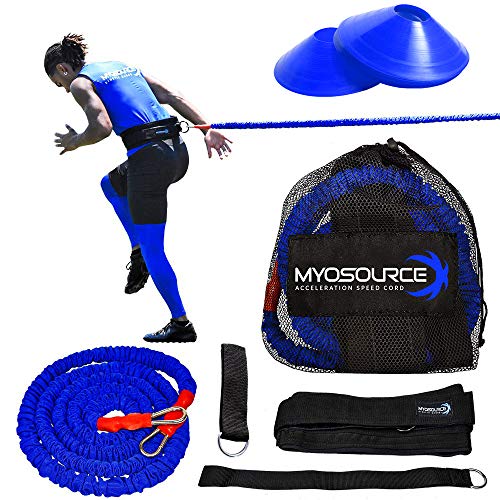
- 360-degree D-ring for multi-directional drills
- Three adjustable belt sizes
- Includes eight agility cones
Best For: Solo and partner acceleration training
Best High-Resistance Option

- Up to 300 pounds of stated resistance
- Two ropes extend 8 to 20 feet each
- Can be doubled for up to 40 feet
Best For: Advanced anchored acceleration drills
Best Compact Leg-Band Set
Elite Supplies Speed Agility Bands

- Four resistance levels from 10 to 30 pounds
- Includes two leg straps and carry bag
- Lightweight one-pound kit
Best For: Portable lower-body accessory training
Best Versatile Bungee System
Resistance Running Training Band

- Up to 80 pounds of tensile strength
- Includes back belt, waist belt, and handles
- Covered by a one-year manufacturer warranty
Best For: Multi-use sprint and home resistance training
Best Overall
Kbands Speed and Strength Leg Bands
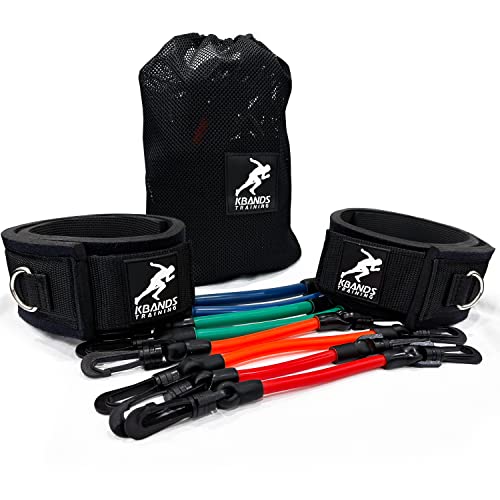
- Padded, non-slip thigh bands
- Multiple tensions for different athletes
- Includes digital speed and agility programs
Best For: Structured hip-strength and sprint-mechanics training
Best for Assisted Sprints
Resistance Running Bungee Band
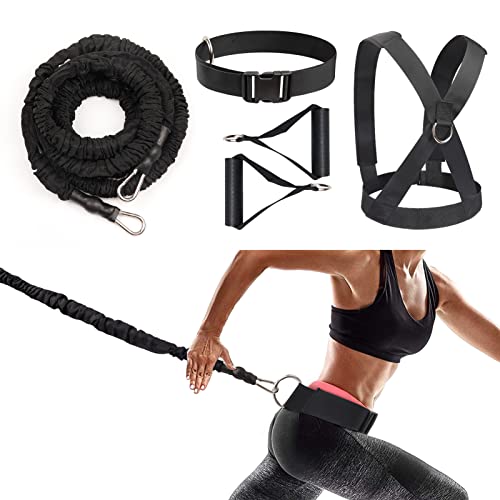
- Up to 80 pounds of tensile resistance
- Adjustable waist and back belts
- Includes handles for varied drills
Best For: Acceleration, lateral movement, and outdoor sprint training
Best for Explosive Power
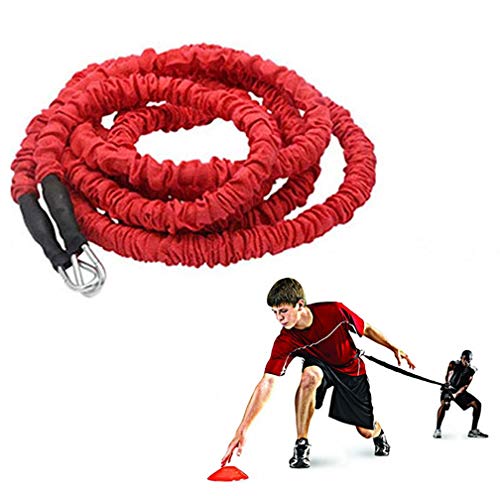
- Supports speed and explosive-force training
- Stretches up to three times its length
- Can be used with a partner or anchor
Best For: Explosive running, jumping, and team-sport conditioning
Best All-Around Leg System
Kinetic Bands Speed Resistance Set

- Natural running motion with leg-focused resistance
- Four levels from 30 to 85 pounds
- Includes videos, stretch strap, and travel bag
Best For: Progressive speed and agility training
Best for Partner Drills
Pseudois Resistance Bungee Band

- 8-foot cord stretches to 20 feet
- 360-degree belt supports multidirectional drills
- Includes door anchor for solo training
Best For: Partner-assisted sprints and agility work
Best for Comfortable Waist Training

- Padded adjustable Velcro waist belt
- 360-degree movement with heavy tension
- Includes V-Strength app and storage bag
Best For: Heavy waist-mounted speed-strength training
Best Multi-Directional Trainer – Acceleration Speed Cord Bungee Kit
For athletes comparing resistance bands for sprint mechanics, the Kinetic Bands Acceleration Speed Cord stands out as a versatile acceleration and change-of-direction system. It includes an adjustable belt, speed cord, anchor strap, hand strap, and eight portable agility cones.
Best For: Multi-sport athletes who want solo or partner-based acceleration, agility, and power drills.
Pros:
- 360-degree D-ring supports resistance from multiple directions.
- Three belt sizes accommodate waist measurements from under 31 inches to 40 inches and over.
- Supports anchored solo training or partner-resisted drills.
- Includes eight stackable agility cones for footwork practice.
Cons:
- Offers one resistance level rather than adjustable levels.
- The 96-inch cord may require suitable training space.
This is a strong all-in-one choice when sprint mechanics work needs to include acceleration, deceleration, lateral movement, and cone-based footwork.
Best High-Resistance Option – Kbands Victory Ropes
The Kbands Victory Ropes are designed for athletes who need substantial resistance during sprint acceleration work. Two ropes can be used individually or doubled, with extension ranges from 8 to 20 feet and stated resistance of up to 300 pounds.
Best For: Strong athletes and coaches programming anchored or release acceleration drills with extended resistance zones.
Pros:
- Provides up to 300 pounds of stated resistance.
- Each rope contains four multi-flex resistance bands inside a safety sleeve.
- Ropes can be doubled for up to 40 feet of resistance training.
- Adjustable belt setup fits the athlete’s waist.
Cons:
- High resistance may be excessive for beginners.
- The system is more specialized than a basic leg-band kit.
Choose this set when progressive overload and longer acceleration zones matter more than compact, lightweight training. Its resistance range is particularly suited to advanced sprint-strength programming.
Best Compact Leg-Band Set – Elite Supplies Speed Agility Bands
This 11-piece Elite Supplies set offers a straightforward way to add resistance to sprint-related leg and glute exercises. It includes two leg straps, four pairs of color-coded natural-rubber bands, and a mesh carrying bag.
Best For: Athletes who want portable leg-resistance and glute-activation work to complement sprint mechanics practice.
Pros:
- Includes four resistance levels ranging from 10 to 30 pounds.
- Leg straps help position the bands for lower-body exercises.
- Compact one-pound kit includes a mesh carry bag.
- Useful for speed, agility, strength, and endurance workouts.
Cons:
- Does not include a long cord, belt, or anchor system for resisted sprints.
- The supplied details list the overall tension support as light.
This is the most portable and budget-oriented style of option in the group. It works best as supplemental resistance for leg activation and strength rather than as a standalone sprint-resistance system.
Best Versatile Bungee System – Resistance Running Training Band
For resistance bands for sprint mechanics that can also support home workouts, this bungee system combines adjustable belts, handles, and a long resistance cord. It is rated for up to 80 pounds of tensile strength and can stretch to three times its original length.
Best For: Sprinters and multi-sport athletes who want adjustable sprint, lateral-movement, water-sprint, and general resistance-training options.
Pros:
- Supports up to 80 pounds of stated tensile strength.
- Includes an adjustable back belt and waist belt for different training uses.
- Two handles enable home resistance exercises.
- One-year manufacturer’s warranty is included.
Cons:
- Provides one listed resistance level rather than multiple selectable levels.
- Its multifunctional setup may require more configuration between drills.
This is a flexible middle-ground option for users who want sprint resistance without limiting the equipment to track work. The adjustable belts and handles make it useful across several training environments.
Best Overall – Kbands Speed and Strength Leg Bands
Kbands are a practical choice for athletes seeking resistance bands for sprint mechanics, especially when the focus is hip strength, glute activation, and lateral movement. The padded thigh bands, rotational clips, stackable resistance, and included digital programs support structured speed and agility work.
Best For: Athletes who want wearable leg resistance bands with guided speed and agility training.
Pros:
- Padded thigh bands are designed not to roll or slip.
- Multiple band tensions support youth through advanced athletes.
- Includes Speed 101, Agility FX, and other digital training programs.
- Resistance bands are stackable and covered by a lifetime warranty.
Cons:
- The set is more specialized for leg and hip exercises than general-purpose resistance training.
- Training programs require downloading them to a compatible device.
Choose Kbands if you want a complete leg-focused system rather than a single resistance cord. Its wearable design and training content make it especially suitable for repeatable sprint-mechanics drills.
Best for Assisted Sprints – Resistance Running Bungee Band
This bungee cord set suits athletes looking for resistance bands for sprint mechanics with acceleration, deceleration, and lateral-movement drills. Its adjustable belts, handles, and stretch-based resistance allow use for sprint practice, water sprints, or general resistance exercises.
Best For: Sprinters and field-sport athletes who need an adjustable partner- or anchor-assisted training cord.
Pros:
- Provides up to 80 pounds of tensile resistance as the cord stretches.
- Includes adjustable back and waist belts for sprint applications.
- Handles support home resistance training and outdoor drills.
- Designed for acceleration, agility, leg strength, and vertical-jump work.
Cons:
- It has one listed resistance level rather than several interchangeable levels.
- Some drills may require appropriate space, an anchor, or a training partner.
This is a flexible option for dynamic sprint work, particularly when you want resistance that increases with stretch. The adjustable belt system broadens its use beyond straight-line running.
Best for Explosive Power – Resistance Training Rope
This resistance rope is suited to athletes who want resistance bands for sprint mechanics alongside explosive-strength work. It can be used for running, jumping, agility, and team-sport exercises, with the rope attached to a partner or a stable grounded object.
Best For: Runners and team-sport athletes training explosive force, speed, stamina, and vertical power.
Pros:
- Supports speed, agility, strength, flexibility, and dynamic-power exercises.
- Offers up to 80 pounds of resistance according to the product description.
- The elastic cord can stretch up to three times its original length.
- Available in listed lengths of 6.6, 9.8, and 16.6 feet.
Cons:
- The product lists one resistance level.
- Partner assistance or a secure anchor is recommended for training.
- The supplied details identify the selected version as a 6.6-foot cord.
Consider this rope when explosive resistance and full-body athletic conditioning matter as much as sprint drills. Its stretch range and anchor options make it adaptable, though setup and supervision are important.
Best All-Around Leg System – Kinetic Bands Speed Resistance Set
For athletes seeking resistance bands for sprint mechanics, this leg-focused system is designed to add resistance while preserving a natural running motion. Its adjustable leg straps, multiple resistance levels, and included training videos make it a practical option for structured speed and agility work.
Best For: Athletes who want progressive resistance for acceleration, balance, flexibility, and sport-specific strength training.
Pros:
- Supports full range of motion during running and multidirectional drills.
- Includes four color-coded resistance levels from 30 to 85 pounds.
- Comes with digital training videos, a stretching strap, and a travel bag.
Cons:
- Designed for users ages 13 and over in this color and resistance configuration.
- Requires attaching and adjusting separate leg straps before training.
Choose this set if you prefer targeted leg resistance and guided workouts over a single-tension bungee. The multiple levels also make it easier to vary training intensity as your conditioning develops.
Best for Partner Drills – Pseudois Resistance Bungee Band
This bungee band is a practical choice for resistance bands for sprint mechanics when you want dynamic overload during partner-assisted sprints, shuffles, and jumps. Its long stretch cord and rotating waist belt support movement in multiple directions, while the included door anchor enables solo sessions.
Best For: Athletes and teams training acceleration, lateral movement, jumping power, and first-step quickness with a partner or anchor point.
Pros:
- An 8-foot nylon cord stretches to 20 feet for dynamic resistance.
- 360-degree rotation supports forward, lateral, backward, and vertical drills.
- Includes a padded adjustable belt, door anchor, reinforced webbing, and snap clips.
Cons:
- Offers one medium tension level rather than multiple resistance settings.
- Partner training requires another person unless using the door anchor.
Its waist-belt design is better suited to whole-body movement and resisted field drills than isolated leg work. Inspecting the cord and clips before use is important, particularly with repeated high-speed training.
Best for Comfortable Waist Training – Vikingstrength 360° Bungee
For resistance bands for sprint mechanics built around waist resistance, the Vikingstrength 360° bungee emphasizes a secure fit and unrestricted movement. Its padded adjustable Velcro belt, heavy tension, and app access suit athletes who want a durable setup for running and field-sport conditioning.
Best For: Runners and football or basketball athletes seeking heavy, waist-mounted resistance for acceleration and speed-strength work.
Pros:
- Adjustable padded Velcro belt is designed for comfort and a snug fit.
- 360-degree design supports movement without restricting direction.
- Includes access to the V-Strength app and a storage bag.
Cons:
- Provides one heavy tension level rather than progressive resistance options.
- Its 1.8-pound weight is less lightweight than some simpler band systems.
This is a strong fit for users who prioritize a padded waist interface and app-supported training. Because the tension is listed as heavy and there is only one resistance level, it may be less adaptable for beginners.
How We Picked the Best Resistance Bands for Sprint Mechanics
We focused on products designed for sprint-specific work rather than general-purpose loop bands alone. The selection includes systems for resisted acceleration, overspeed and release drills, lateral movement, leg-drive training, and broader speed-and-agility workouts.
Key considerations included the type of resistance, available adjustment, anchor or harness design, claimed stretch range, portability, included accessories, and whether the system supports solo training. Because product specifications and included components can vary, verify the current listing before buying.
Quick Comparison
| Best For | Look For | Typical Setup |
|---|---|---|
| Acceleration drills | Strong cord, secure belt, adjustable resistance | Waist-mounted or anchored |
| Overspeed and release work | Long stretch distance and controlled recoil | Partner-assisted or anchored |
| Agility and lateral movement | Leg bands with comfortable cuffs | Leg-mounted |
| Home or travel training | Lightweight design and compact storage | Portable cord or band system |
| Progressive training | Multiple resistance levels or interchangeable bands | Modular kit |
Key Buying Factors for Resistance Bands for Sprint Mechanics
Resistance and Progression
Choose enough tension to challenge acceleration mechanics without forcing a shortened stride, excessive forward lean, or poor posture. Multiple resistance levels are more useful than one very heavy band because they allow warm-ups, technical drills, and progressive loading.
Attachment and Safety
Waist belts and harnesses should fit securely without restricting breathing or hip movement. For anchored systems, use only a solid, appropriate anchor point and inspect the cord for fraying, cuts, or overstretching. Recoil space matters, so keep people and objects outside the band’s path.
Length and Training Area
Long cords can support resisted running and release drills but need more room and careful setup. Shorter leg bands work well for marching, activation, and lateral drills in smaller spaces. Measure your available training area before selecting a high-stretch system.
Comfort and Movement Quality
Look for padded or wide straps, secure cuffs, and materials that do not pinch during repeated efforts. The equipment should let you maintain normal sprint positions rather than becoming a distraction.
Who Should Buy Which Resistance Bands for Sprint Mechanics?
New athletes: Start with adjustable resistance and a stable waist or leg setup that makes it easy to learn technique at low tension.
Speed and field-sport athletes: Consider a versatile cord or bungee kit that supports acceleration, resisted running, lateral work, and change-of-direction drills.
Coaches and training groups: Prioritize durable systems with broad resistance ranges, long stretch distances, and quick adjustments between athletes.
Home and travel users: Choose a compact leg-band or portable cord kit, provided you have a safe anchor or enough open space for the intended drills.
Whichever option you choose, use resistance as a technical training tool—not a substitute for full-speed sprinting, strength work, and adequate recovery. Begin with manageable tension, keep repetitions controlled, and stop if the band or attachment shows damage.