
Rocky trails demand more than basic running shoes. A protective rock plate can help shield your feet from sharp stones and roots while you maintain a steady pace over uneven ground.
We compared 10 trail models from Brooks, Merrell, Topo Athletic, Saucony, and ASICS, focusing on underfoot protection, traction, cushioning, weather resistance, fit, and everyday trail versatility.
Best 10 Trail Running Shoes with Rock Plate Picks for 2026
Best All-Terrain Stability

- Flexible Ballistic Rock Shield
- Grippy TrailTack Green outsole
- DNA LOFT v3 cushioning
Best For: Runners tackling varied mountain and rugged trail terrain
Best Wet-Trail Grip

- Rock plate for trail protection
- Vibram MegaGrip outsole
- Lightweight FloatPro Foam
Best For: Long, rugged miles in wet or dry conditions
Best Roomy Toe Box

- Flexible ESS rock plate
- Vibram Megagrip traction
- Roomy anatomical toe box
Best For: Technical trails and runners wanting natural toe space
Best Lightweight Flexibility

- Improved moisture-shedding rock plate
- PWRTRAC rubber traction
- Flexible, lighter design
Best For: Nimble trail running on rugged terrain
Best Budget Trail Pick

- Moderate cushioning
- Neutral trail design
- All-weather grip
Best For: Casual trail running and hiking
Best Cushioned Trail Ride

- Maximum cushioning
- GUIDESOLE shock absorption
- ASICSGRIP traction
Best For: Comfort-focused trail running
Best Waterproof Rock-Protection Pick

- Forefoot rock plate
- GORE-TEX waterproofing
- Vibram Megagrip traction
Best For: Wet, technical, rocky trails
Best Waterproof Pick
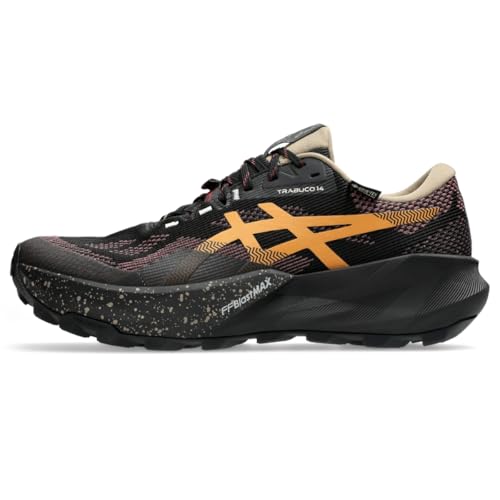
- Waterproof GORE-TEX Invisible Fit upper
- Flexible rock protection plate
- Responsive FF BLAST MAX cushioning
Best For: Wet-weather trail running with moderate cushioning
Best Low-Drop Option

- 3mm drop with forefoot rock plate
- Waterproof eVent bootie construction
- Vibram Megagrip outsole
Best For: Low-drop trail running and hiking in wet conditions
Best Maximum-Cushion Pick

- Maximum cushioning with rearfoot GEL
- Flexible rock protection plate
- Waterproof GORE-TEX Invisible Fit upper
Best For: Cushioned, protective running on wet rugged trails
Best All-Terrain Stability – Brooks Cascadia 19
Brooks Men’s Cascadia 19 Mountain Trail Running Shoe - Black/Black/Ebony - 10 Medium
Check Price On AmazonFor runners who want trail running shoes with rock plate protection across changing terrain, the Brooks Cascadia 19 combines a flexible Ballistic Rock Shield with the Trail Adapt System. Its DNA LOFT v3 cushioning, reinforced toe cap, and grippy recycled-content outsole make it a well-rounded option for mountain trails.
Best For: Trail runners seeking a stable, adaptable shoe for wet, dry, uneven, and rugged terrain.
Pros:
- Flexible articulated Ballistic Rock Shield adds underfoot protection.
- TrailTack Green outsole provides traction on wet and dry surfaces.
- DNA LOFT v3 cushioning offers a soft, responsive ride.
- Reinforced toe cap, mudguard, and overlays help protect the upper.
Cons:
- It is not water resistant.
- Moderate-to-high cushioning may feel less minimal than some trail shoes.
The Cascadia 19 is a strong all-around pick when protection, traction, and stability matter more than a minimalist feel.
Best Wet-Trail Grip – Merrell Agility Peak 6
The Merrell Agility Peak 6 is a practical choice among trail running shoes with rock plate protection, especially for long, rugged miles. Its rock plate works with FloatPro Foam cushioning and a Vibram MegaGrip outsole designed to maintain traction on both dry and wet surfaces.
Best For: Runners who prioritize dependable grip, cushioning, and protection on demanding trails.
Pros:
- Rock plate helps protect against rough trail surfaces.
- Vibram MegaGrip rubber is designed for dry and wet traction.
- FloatPro Foam provides lightweight comfort for longer outings.
- Lugs are shaped to improve traction and shed debris.
Cons:
- The shoe is not water resistant.
- Its listed weight is relatively high at 1.5 pounds.
Choose the Agility Peak 6 when secure footing and sustained cushioning are priorities for rugged, wet-or-dry trail routes.
Best Roomy Toe Box – Topo Athletic Terraventure 4
For technical routes, the Topo Athletic Terraventure 4 stands out among trail running shoes with rock plate protection. Its flexible ESS rock plate guards against sharp rocks and roots, while the Vibram Megagrip outsole and anatomical toe box support confident, comfortable movement over rugged terrain.
Best For: Trail runners wanting moderate cushioning, strong grip, and extra room for natural toe splay.
Pros:
- Flexible ESS rock plate protects against rocks and roots.
- Vibram Megagrip outsole grips wet, muddy, and dry rocky trails.
- Roomy anatomical toe box may help reduce pressure and discomfort.
- Gaiter compatibility adds an option for keeping out dirt and debris.
Cons:
- Gaiters are sold separately.
- The shoe is not water resistant.
- Moderate cushioning may not suit runners seeking maximum underfoot plushness.
The Terraventure 4 is a compelling technical-trail option for runners who value protective flexibility and a less restrictive forefoot.
Best Lightweight Flexibility – Saucony Peregrine 12
The Saucony Peregrine 12 offers a lighter, flexible approach to trail running shoes with rock plate protection. Compared with its predecessor, it is over an ounce lighter and adds an improved rock plate that sheds moisture, while PWRTRAC rubber and a redesigned lug pattern help maintain grip on rugged trails.
Best For: Runners seeking a flexible, lightweight-feeling trail shoe with traction and rock protection.
Pros:
- Improved rock plate helps protect feet and sheds moisture.
- Redesigned lug pattern helps clear debris.
- PWRTRAC rubber is designed for traction and grip.
- Lightweight and flexible construction supports a quick trail feel.
Cons:
- It is not water resistant.
- Moderate cushioning may offer less softness than highly cushioned models.
- The product listing reports a 3-pound item weight.
The Peregrine 12 makes sense for runners who want a nimble, flexible option for rugged terrain without giving up a protective rock plate.
Best Budget Trail Pick – Saucony Excursion TR14
The Saucony Men’s Excursion TR14 is a straightforward option for shoppers seeking trail running shoes with rock plate-style trail protection considerations, though the supplied details do not specify a rock plate. Its neutral support, moderate cushioning, synthetic-and-mesh construction, and all-weather grip make it suited to everyday outdoor routes.
Best For: Casual trail running, hiking, and outdoor use on general trails.
Pros:
- Moderate cushioning offers a balanced underfoot feel.
- Neutral pronation profile suits runners who do not need correction.
- All-weather grip and a trail-specific surface recommendation.
Cons:
- No rock plate is listed in the supplied product details.
- Not water resistant.
- Provides moderate rather than maximum cushioning.
The Excursion TR14 is a practical, casual trail shoe for general outdoor mileage. Choose it when you value a neutral fit and moderate cushioning, but look to a model with a confirmed rock plate for especially rocky terrain.
Best Cushioned Trail Ride – ASICS Trabuco MAX 5
The ASICS Men’s Trabuco MAX 5 emphasizes high-cushion comfort for trail runners who want a smoother, easier ride. It is a strong consideration among trail running shoes with rock plate requirements, although the supplied notes do not confirm a rock plate; its FF BLAST PLUS foam, GUIDESOLE design, and ASICSGRIP outsole define its trail setup.
Best For: Runners prioritizing maximum cushioning, shock absorption, and grip on varied trails.
Pros:
- Maximum cushioning with responsive FF BLAST PLUS foam.
- GUIDESOLE technology is designed to reduce ankle flexion and absorb shock.
- ASICSGRIP rubber provides traction across varied terrain.
- Water-repellent processing on the engineered mesh upper.
Cons:
- A rock plate is not listed in the supplied details.
- Not rated as fully waterproof.
- Maximum cushioning may offer less direct ground feel than a low-cushion shoe.
The Trabuco MAX 5 makes the most sense for longer or more comfort-focused trail outings. If underfoot rock protection is essential, verify the construction before buying because a rock plate is not specified here.
Best Waterproof Rock-Protection Pick – Topo Terraventure 5 GTX
The Topo Athletic Men’s Terraventure 5 GTX is the clearest match for shoppers seeking trail running shoes with rock plate protection. It combines a forefoot rock plate with GORE-TEX Invisible Fit waterproofing, Vibram Megagrip traction, and a low-cushion platform for technical, wet, and rocky trails.
Best For: Wet, technical trails with sharp rocks, roots, slippery surfaces, and loose debris.
Pros:
- Forefoot rock plate helps protect against sharp rocks and roots.
- GORE-TEX Invisible Fit provides lightweight waterproof protection.
- Vibram Megagrip outsole supports confident traction on slippery terrain.
- Low 25 x 22 mm platform and 3 mm drop promote ground connection.
Cons:
- Low cushioning may feel less plush than maximum-cushion trail shoes.
- Waterproof construction can be warmer than a standard mesh upper.
Among these options, the Terraventure 5 GTX is the most directly aligned with the target feature because its rock plate is explicitly listed. It is the practical choice for runners who also need waterproof protection and dependable grip on technical trails.
Best Waterproof Pick – ASICS Trabuco 14 GTX
The ASICS Trabuco 14 GTX is a practical choice for runners seeking trail running shoes with rock plate protection in wet conditions. Its waterproof GORE-TEX Invisible Fit upper, flexible rock protection plate, and responsive FF BLAST MAX cushioning suit varied outdoor trails.
Best For: Wet-weather trail running and runners who want moderate cushioning with rock protection.
Pros:
- Waterproof GORE-TEX coverage is bonded to the upper and supports quicker dry-out times.
- Flexible rock protection plate helps shield feet from rocks and rugged terrain.
- FF BLAST MAX foam combines soft cushioning with responsive energy return.
- Reflective details can improve visibility during early-morning or nighttime runs.
Cons:
- Moderate cushioning may offer less underfoot plushness than maximum-cushioning options.
- The waterproof construction may be more specialized than needed for dry trails.
Choose this model if wet-weather coverage and a balanced, energetic ride matter more than maximum cushioning.
Best Low-Drop Option – Topo Terraventure 4 WP
The Topo Athletic Terraventure 4 WP combines a 3mm drop with waterproof construction and a forefoot rock plate, making it a strong option among trail running shoes with rock plate protection. Its Vibram Megagrip outsole is designed for traction and slip resistance across wet and varied terrain.
Best For: Trail runners and hikers who prefer a low-drop platform, moderate cushioning, and wet-condition traction.
Pros:
- Forefoot rock plate adds protection while the 25 x 22mm platform provides moderate cushioning.
- eVent bootie construction helps lock water out in wet conditions.
- Vibram Megagrip outsole offers traction and slip resistance on varied terrain.
- Lightweight, rugged design is intended for both trail running and hiking.
Cons:
- The 3mm drop may not suit runners accustomed to a higher-drop shoe.
- Moderate cushioning may not provide the maximum underfoot softness some runners prefer.
This is a versatile pick for runners who want waterproof protection, a low-drop feel, and a grippy outsole for mixed trail use.
Best Maximum-Cushion Pick – ASICS Gel-Trabuco MT GTX
The ASICS Gel-Trabuco MT GTX is built for runners who want trail running shoes with rock plate protection and a highly cushioned ride. It pairs a flexible rock protection plate with rearfoot GEL, FF BLAST PLUS cushioning, waterproof GORE-TEX coverage, and a protective toe guard.
Best For: Runners seeking maximum cushioning, waterproof coverage, and added protection for rugged trails.
Pros:
- Flexible rock protection plate helps shield the foot from rocks and rugged terrain.
- Maximum cushioning combines rearfoot GEL shock absorption with FF BLAST PLUS foam.
- GORE-TEX Invisible Fit technology provides waterproof coverage bonded to the upper.
- Toe guard helps improve durability around the toe area.
Cons:
- Its maximum-cushioning build may feel less direct than a moderate-cushioning trail shoe.
- The listed weight of 1.9 pounds may be less appealing to runners prioritizing a lighter shoe.
Consider this model when cushioning and protective features take priority, especially for wet and rugged trail outings.
How We Picked the Best Trail Running Shoes with Rock Plates
We evaluated these shoes for the features that matter most on technical trails: protection from rocks and roots, outsole traction, cushioning, stability, durability, weight, fit, and weather performance. We also considered how each design balances protection with ground feel. A heavily cushioned shoe may be more comfortable for long outings, while a lower, more responsive model can feel quicker and more precise on uneven terrain.
Waterproof versions were assessed separately because a membrane can improve wet-weather protection but may reduce breathability. Since fit varies by foot shape and brand, check the manufacturer’s sizing guidance before ordering.
Quick Comparison
| Best For | What to Look For |
|---|---|
| Rocky, technical trails | Firm rock protection, secure upper, aggressive outsole |
| Long-distance comfort | Ample cushioning, stable platform, breathable fit |
| Wet and muddy conditions | Waterproof membrane or high-traction rubber |
| Light trail runs | Lower weight, flexible construction, moderate protection |
| Wide or naturally shaped feet | Roomier toe box and adjustable midfoot hold |
Key Buying Factors for Trail Running Shoes with Rock Plate
Protection and Flexibility
Rock plates vary in stiffness and coverage. More protection is useful on sharp, technical surfaces, but an overly rigid shoe can feel less natural on smooth paths. Choose enough shielding for your usual terrain without ignoring comfort.
Traction and Stability
Look for lug patterns suited to your routes. Deep, widely spaced lugs can shed mud, while moderate lugs often roll more smoothly on packed dirt. A secure heel, supportive upper, and stable midsole are especially important when traversing slopes or loose rock.
Cushioning, Drop, and Fit
Higher cushioning can reduce fatigue on long runs, while lower-stack designs may offer better trail feedback. Heel-to-toe drop also affects running feel, so runners should transition gradually when changing geometry. Leave enough toe room for swelling and downhill movement, but make sure the heel does not slip.
Waterproofing and Breathability
GTX and other waterproof models are useful in rain, wet grass, and shallow puddles. For hot conditions or frequent creek crossings, a breathable non-waterproof shoe may dry faster and feel cooler.
Who Should Buy Which Trail Running Shoes with Rock Plate?
Choose a protective, stable model if your routes include frequent rocks, roots, and uneven descents. Pick a well-cushioned option for long trail days or runners who prioritize comfort over maximum ground feel. Waterproof versions make the most sense for consistently wet climates, whereas breathable uppers are usually better for warm-weather running.
If you run a mix of roads and moderate trails, favor a lighter shoe with moderate lugs and flexible cushioning. Runners who need more toe-room should prioritize a naturally shaped forefoot and verify width availability. Finally, match the shoe to your actual terrain and mileage: the best Trail Running Shoes with Rock Plate are the ones that provide sufficient protection without adding unnecessary weight or stiffness.