
The best medicine balls for circuit training make it easier to combine strength, power, balance, and core work without changing equipment between exercises.
We selected 10 versatile options across light toning balls, weighted training balls, slam balls, bounce-capable models, and wall balls so you can match the ball to your workout space and training style.
Best 10 Medicine Balls for Circuit Training Picks for 2026
Best Heavy-Duty Pick
ProsourceFit Slam Medicine Ball

- Textured tread grip
- Sand-filled, low-bounce design
- Available from 5 to 50 pounds
Best For: Slam-focused strength and conditioning circuits
Best Weight Range
RitFit Balance Training Medicine Ball
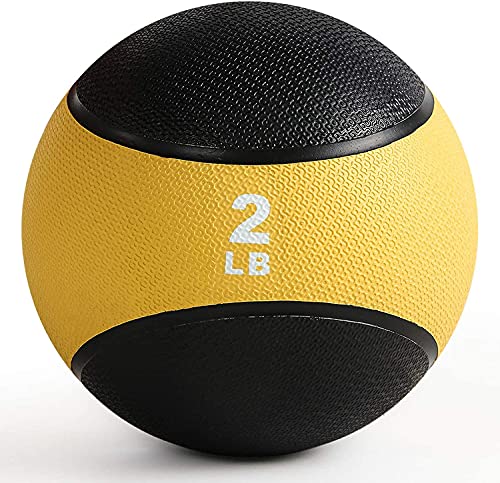
- Ten options from 2 to 20 pounds
- Textured rubber surface
- Supports balance and coordination work
Best For: Progressive full-body and coordination circuits
Best Simple Slam Option
Amazon Basics Slam Medicine Ball

- 15-pound deadweight design
- Impact-absorbing PVC construction
- Textured non-slip surface
Best For: HIIT, CrossFit, and controlled slam circuits
Best Rebound Pick
Champion Sports Rhino Elite Medicine Ball

- Consistent-bounce hollow rubber
- Textured grip surface
- Light 2-pound model
Best For: Light rebound, agility, and core circuits
Compact Stability Pick
ProsourceFit Weighted Toning Ball
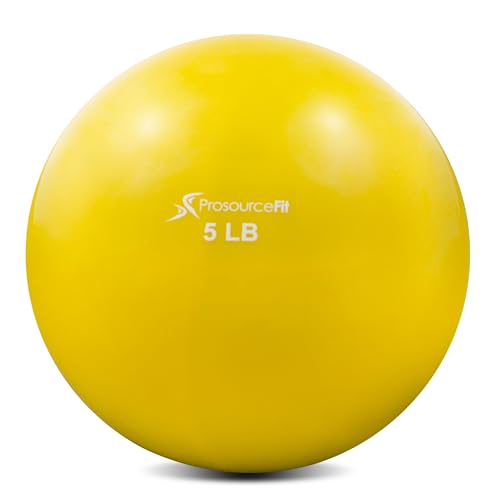
- Sand-filled PVC ball supports controlled movement
- Six options from 2 to 8 pounds
- Compact for travel and low-impact circuits
Best For: Pilates, stability work, and portable training
Dynamic Conditioning Pick
Mikolo Textured-Grip Medicine Ball
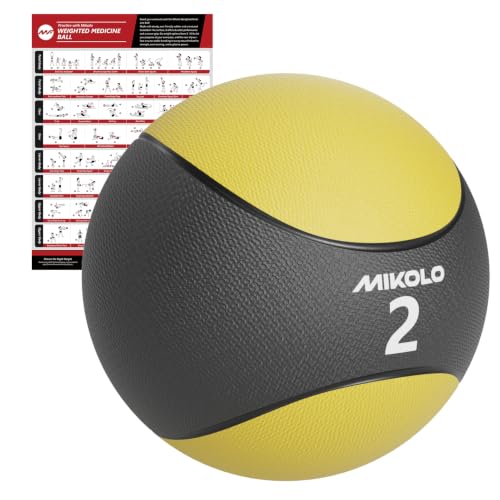
- Eight weights from 2 to 12 pounds
- Textured rubber grip supports secure handling
- Designed for dynamic full-body exercises
Best For: Explosive conditioning and full-body circuits
Unstable Core Pick

- Iron-sand interior adds instability
- Weights range from 2 to 10 pounds
- Portable for balance, yoga, and core circuits
Best For: Stability-focused and low-impact circuit workouts
Wall-Throw Specialist
Titan Fitness Soft Leather Wall Ball

- Balanced 10-pound, 14-inch wall-ball design
- Soft PU leather exterior with side loop handles
- Double-stitched shell; not intended for slams
Best For: Wall throws and core-conditioning circuits
Everyday Rubber Pick
Amazon Basics 6-Pound Medicine Ball

- Firm 6-pound rubber construction
- Textured grip with weight labeling on both sides
- Can bounce for tosses and rebound drills
Best For: Classic core, balance, and full-body circuits
Best Heavy-Duty Pick – ProsourceFit Slam Medicine Ball
For shoppers comparing medicine balls for circuit training, the ProsourceFit Slam Medicine Ball stands out for deadweight work that demands a secure grip and minimal rebound. Its textured tread surface, sand-filled core, and PVC shell support slams, throws, squats, presses, and core exercises.
Best For: Athletes and home-gym users who want a non-bouncing ball for strength, conditioning, and slam-focused circuits.
Pros:
- Tire-tread texture helps provide traction during sweaty workouts.
- Sand-filled construction minimizes bouncing and rolling after slams.
- Available in weights from 5 to 50 pounds for different training levels.
- Waterproof PVC shell is designed to absorb impact.
Cons:
- The deadweight design is intended for slams rather than rebound drills.
- Heavier options may feel more challenging than traditional weights.
This is a practical choice when circuit training includes powerful slams and controlled loaded movements. Beginners may want to start with the suggested 10- to 15-pound range to maintain control and mechanics.
Best Weight Range – RitFit Balance Training Medicine Ball
The RitFit Balance Training ball is a versatile option for medicine balls for circuit training, especially when exercises move between strength, balance, and coordination. Its textured rubber surface supports movements such as squats, presses, lunges, chest tosses, jumps, and deadlifts.
Best For: Beginners and progressing users who want multiple weight choices for full-body circuits and coordination work.
Pros:
- Ten weight options range from 2 to 20 pounds.
- Textured, basketball-like surface supports a more secure grip.
- Works with strength, balance, coordination, and core exercises.
- Rubber construction is described as sturdy and durable.
Cons:
- The supplied details describe a 2-pound model, so the selected weight matters.
- Its features emphasize general exercise and balance rather than dedicated slam training.
RitFit makes sense for circuits that vary intensity and movement pattern. The broad weight range also allows users to progress gradually instead of committing to a single heavy ball.
Best Simple Slam Option – Amazon Basics Slam Medicine Ball
Amazon Basics Heavy-Duty Slam Medicine Ball for Exercise, Weighted Design, 15lb, Black
Check Price On AmazonThe Amazon Basics Slam Medicine Ball offers a straightforward design for medicine balls for circuit training that includes slams, HIIT, and strength exercises. Its sand-filled PVC construction absorbs impact, while the textured surface helps maintain control during demanding sessions.
Best For: CrossFit, HIIT, and home-gym circuits requiring a controlled, non-bouncing 15-pound slam ball.
Pros:
- Heavy-duty PVC shell is designed to absorb powerful impacts.
- Sand-filled deadweight core helps prevent unwanted bouncing.
- Textured surface supports grip during sweaty workouts.
- Balanced weight distribution suits controlled and dynamic movements.
Cons:
- The supplied model is a fixed 15-pound size.
- Its deadweight design is less suited to bounce-based drills.
This ball is a focused pick for athletes who want one consistent weight for slam and conditioning circuits. The 15-pound format offers a substantial challenge while retaining the controlled behavior expected from a deadweight ball.
Best Rebound Pick – Champion Sports Rhino Elite Medicine Ball
For medicine balls for circuit training that benefit from consistent bouncing, the Champion Sports Rhino Elite uses hollow synthetic rubber rather than a sand-filled deadweight core. Its textured surface is designed for grip, while the 2-pound size suits lighter exercise and fitness work.
Best For: Lighter circuits involving rebound drills, core strengthening, flexibility, agility, and controlled throws.
Pros:
- Hollow synthetic rubber construction allows a consistent bounce.
- Textured surface supports grip and handling.
- Compact 2-pound weight is appropriate for lighter training.
- Designed for core, muscle, flexibility, and agility exercises.
Cons:
- The supplied model is only 2 pounds.
- It is not the best match for deadweight slam training.
- The rebounder is sold separately.
The Rhino Elite is the clearest choice here when a circuit calls for rebound rather than a no-bounce slam. Its lighter weight and consistent bounce make it better suited to speed, handling, and movement-quality drills.
Compact Stability Pick – ProsourceFit Weighted Toning Ball
For circuit training routines that mix strength, mobility, and controlled core work, the ProsourceFit Weighted Toning Ball offers a compact alternative to traditional dumbbells. Its sand-filled PVC construction and small 5.1-inch diameter are suited to Pilates, yoga, physical therapy, and lighter resistance intervals.
Best For: Pilates-inspired circuits, stability exercises, travel workouts, and users who want reduced wrist and joint stress.
Pros:
- Available in six weights from 2 to 8 pounds.
- Sand filling and uneven weight distribution encourage controlled movement and ongoing muscle engagement.
- Compact, lightweight design fits easily in a bag or suitcase.
- Suitable for Pilates, yoga, strength training, and physical therapy.
Cons:
- Its small toning-ball format may be less suitable for explosive throwing or slamming drills.
- Requires dry storage and should not be stored on wood floors or surfaces.
This is a practical choice when your medicine balls for circuit training need to support precise, low-impact movements rather than high-impact conditioning. Choose the weight that matches your grip and intended exercises.
Dynamic Conditioning Pick – Mikolo Textured-Grip Medicine Ball
The Mikolo Weighted Medicine Ball is built for more dynamic medicine balls for circuit training, with a textured rubber surface designed to provide a secure grip during squats, presses, lunges, chest passes, jumps, and deadlifts. Its rubber construction is intended to handle impact-focused training while supporting progressive loading.
Best For: Full-body conditioning circuits, explosive strength work, grip-focused exercises, and users progressing through multiple weight levels.
Pros:
- Eight weight options range from 2 to 12 pounds.
- Textured, basketball-like rubber surface helps provide a non-slip grip.
- Rubber shell and bladder are designed for durability and impact resistance.
- Supports core stability, coordination, balance, and explosive movement.
Cons:
- The supplied listing identifies a youth age range, so adult buyers should confirm the selected weight and fit.
- Only one weighted ball is included.
With its broad weight range and grippy rubber exterior, this model is the strongest fit here for circuits that alternate traditional resistance exercises with faster, more powerful movements. The included posture guide may also help users organize full-body sessions.
Unstable Core Pick – Yes4All Weighted Toning Ball
The Yes4All Weighted Toning Ball brings instability to medicine balls for circuit training through an iron-sand interior inside a PVC shell. That design can add a balance and coordination challenge to compact strength, flexibility, Pilates, yoga, and warm-up circuits.
Best For: Core stability, balance training, flexibility sessions, office or travel workouts, and controlled two-handed exercises.
Pros:
- Weight options range from 2 to 10 pounds.
- Iron-sand filling creates instability intended to engage stabilizing muscles.
- Compact and portable for travel, office, or quick at-home workouts.
- Supports strength, balance, coordination, and flexibility work.
Cons:
- Larger sizes may require two-handed handling.
- The PVC surface should not be placed directly on painted furniture.
- Its soft toning-ball design may be less appropriate for high-impact slams.
This is a useful option for circuit participants who value balance and stabilization more than impact training. Check the ball dimensions and selected weight carefully, especially if you plan to use it for one-handed exercises.
Wall-Throw Specialist – Titan Fitness Soft Leather Wall Ball
For medicine balls for circuit training that emphasize controlled throws and transitions, the Titan Fitness Soft Leather Medicine Wall Ball offers a balanced 14-inch design with a comfortable exterior. Its side loops can help reposition your grip between exercises.
Best For: Wall throws, overhead lunges, Russian twists, squat throws, and core-conditioning circuits.
Pros:
- Color-coded 10-pound ball with even internal weight balance.
- Soft PU leather and PP cotton exterior provide a comfortable, flexible hold.
- Double-stitched seams help maintain the shell through repeated wall contact.
- Side loop handles support quick grip adjustments between sets.
Cons:
- Not designed for high-impact floor slams.
- The 14-inch diameter may feel bulky for users seeking a compact ball.
This is a specialized choice for circuits built around wall work and dynamic core movements. Choose it when handling comfort and predictable wall throws matter more than slam-ball versatility.
Everyday Rubber Pick – Amazon Basics 6-Pound Medicine Ball
For medicine balls for circuit training across upper-body, lower-body, and full-body movements, this Amazon Basics model provides a straightforward 6-pound rubber option. Its lightly textured surface is intended to support grip during common exercises.
Best For: Ball tosses, weighted twists, squats, sit-ups, balance work, and general core-strength circuits.
Pros:
- 6-pound weight suits a range of classic medicine-ball exercises.
- Sturdy firm-rubber construction is labeled on both sides.
- Lightly textured surface provides a grippy feel.
- Can bounce off hard surfaces for rebound-based drills.
Cons:
- Only one 6-pound weight is specified, limiting progression within this model.
- Rubber construction lacks the softer feel of leather-style balls.
This is a practical, no-frills option for home or general fitness circuits. Its bounce capability adds exercise variety, while the moderate weight works well for foundational strength and balance movements.
Progression-Friendly Option – Core Soft-Touch Weighted Ball
For medicine balls for circuit training that can accommodate changing workout demands, the Core Weighted Medicine Ball line offers sizes from 4 to 30 pounds. Its textured vegan leather surface provides a cushioned, non-slip grip for strength, balance, and recovery work.
Best For: Users who want to progress across multiple weights while training strength, balance, recovery, and full-body movement patterns.
Pros:
- Wide 4- to 30-pound range supports gradual progression.
- Textured vegan leather helps provide a secure, cushioned grip.
- Packed inner material is designed to retain shape through repeated use.
- Suitable for strength training, balance work, recovery, and full-body workouts.
Cons:
- Not intended for slamming.
- Individual models are sold as one ball, so a complete weight progression requires multiple purchases.
This line stands out when long-term progression is a priority. The broad weight selection makes it easier to match the ball to different circuit exercises, though users needing slam training should choose a purpose-built slam ball instead.
How We Picked the Best Medicine Balls for Circuit Training
We focused on the factors that matter most during fast-moving workouts: weight selection, surface texture, construction, grip, rebound behavior, and exercise compatibility. A good circuit-training ball should be easy to handle when your hands are sweaty, durable enough for repeated use, and appropriately sized for movements such as squats, Russian twists, presses, throws, and slams.
We also included a range of designs. Soft toning balls suit Pilates, rehabilitation, balance work, and lighter conditioning, while rubber slam balls and wall balls are better suited to explosive training. Product lines with multiple weights earned consideration because they make it easier to progress without replacing your entire setup.
Quick Comparison
| Training need | Best ball type | What to prioritize |
|---|---|---|
| Light toning and mobility | Soft weighted ball | Comfortable shell and manageable weight |
| Core and full-body circuits | Standard weighted medicine ball | Secure grip and balanced shape |
| Repeated slams | Dead-weight slam ball | Durable, low-rebound construction |
| Wall throws and partner passes | Wall ball or bounce ball | Soft exterior and predictable response |
| Progressive training | Multi-weight collection | Several useful weight increments |
Key Buying Factors for Medicine Balls for Circuit Training
Choose the Right Weight
For fast circuits, choose a weight you can control for every repetition without losing posture. Lighter balls work well for overhead movements, rotational exercises, Pilates, and high-repetition conditioning. Heavier options are better for slower strength work, loaded carries, and powerful slams. If several people will use the ball, a varied set or broad product range offers more flexibility.
Match Construction to the Exercises
Dead-weight slam balls are designed to absorb impact and usually should not be used for rebound drills. Hollow rubber balls may bounce and work better for chest passes or wall throws, but they can be less suitable for hard slams. Soft leather-style wall balls are comfortable for catching and pressing, though they may require more space and care.
Check Grip, Size, and Storage
A textured or durable surface improves control during swings, cleans, and rotational work. Larger balls can be easier to catch but may be awkward for smaller users. Before buying, confirm the ball’s diameter, whether it needs inflation, and whether your floor, wall, or training area can handle repeated impact.
Who Should Buy Which Medicine Balls for Circuit Training?
Beginners and home-gym users: Start with a moderate standard medicine ball or a light-to-medium weighted ball that supports squats, presses, twists, and carries.
Power and conditioning athletes: Choose a durable slam ball with a reliable textured grip and a weight that allows forceful repetitions without compromising technique.
Pilates, yoga, and rehabilitation users: Look for soft, light toning balls with comfortable surfaces and color-coded weights for gradual progression.
Families, teams, and shared gyms: A multi-weight range is usually the most practical choice, allowing different users to train at appropriate intensities.
Wall-ball and partner-drill users: Choose a soft wall ball or predictable-bounce model, and verify that the construction is intended for throwing rather than slamming.